


Insights from Health Promotion Foundations Across Contexts
Overview
Across multiple countries, e-cigarettes are increasingly reaching children and young people. While often framed as an individual behaviour issue, emerging evidence shows that youth vaping is shaped by interconnected systems—including marketing practices, online availability, regulatory environments, social norms, and access to cessation support.
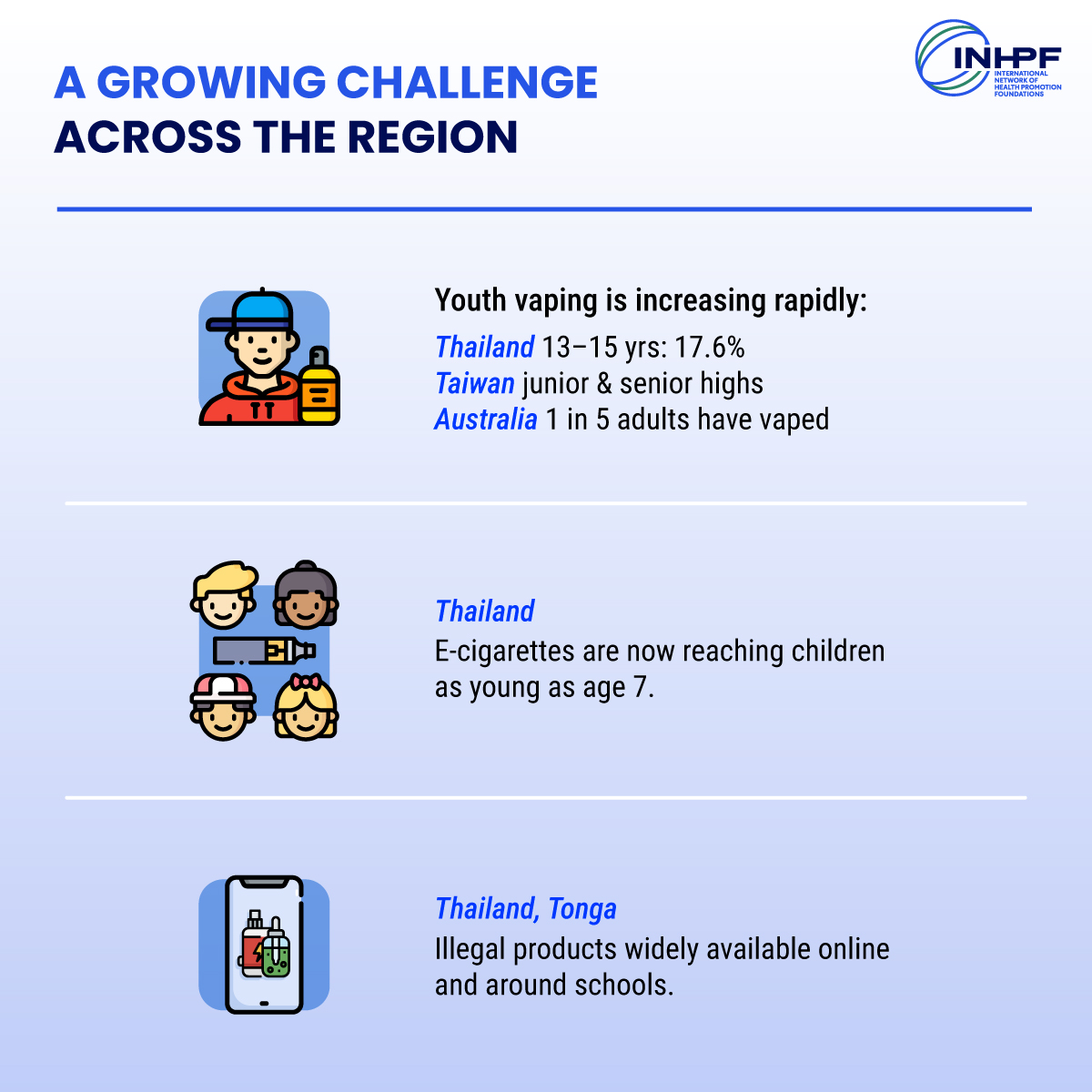
This insight brings together comparative learning from across the INHPF, highlighting how Health Promotion Foundations (HPFs) are responding to e-cigarettes as an emerging health promotion challenge through coordinated, system-level approaches.
Why youth vaping is a growing concern
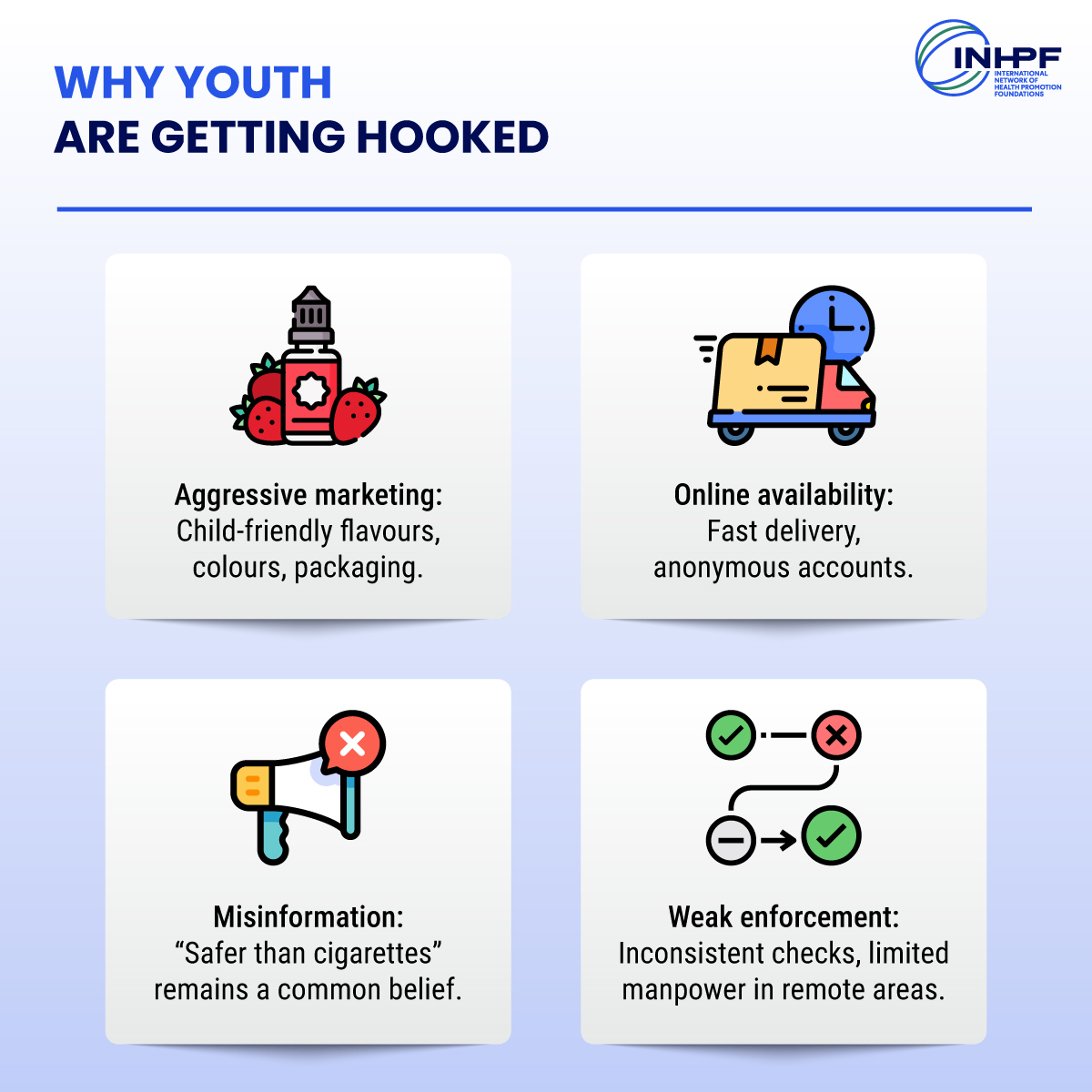
Experiences across different contexts point to several shared drivers behind the rise of youth vaping:
- Aggressive marketing strategies, including flavours, packaging, and youth-appealing imagery
- Online sales and informal markets that bypass age restrictions
- Persistent misinformation around perceived harm
- Uneven enforcement capacity across systems and settings
Together, these factors enable e-cigarettes to reach younger age groups and contribute to the normalisation of use among children and adolescents.
 Download
Why Youth Are Getting Hooked: Illustration showing drivers of youth vaping, including marketing, online access, misinformation, and weak enforcement.
Key challenges that remain
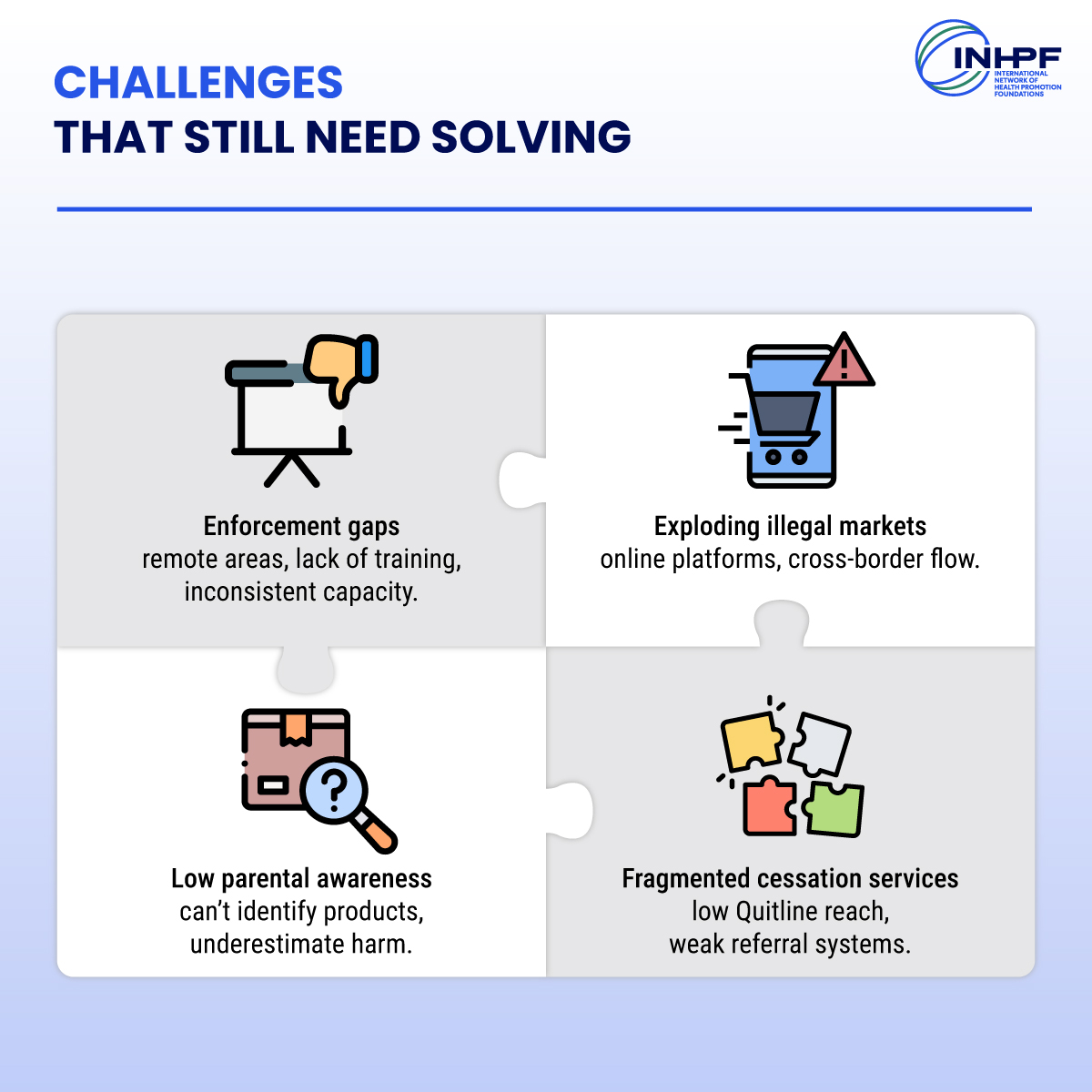
Despite increasing awareness, several challenges continue to limit effective responses:
- Gaps in enforcement, particularly in resource-constrained or digitally complex environments
- Expanding illegal and cross-border markets facilitated by online platforms
- Fragmented cessation and quitting support, with limited reach among young people
- Low parental and community awareness of emerging products and associated risks
Addressing these challenges requires approaches that move beyond isolated interventions toward aligned action across systems.
What works across contexts
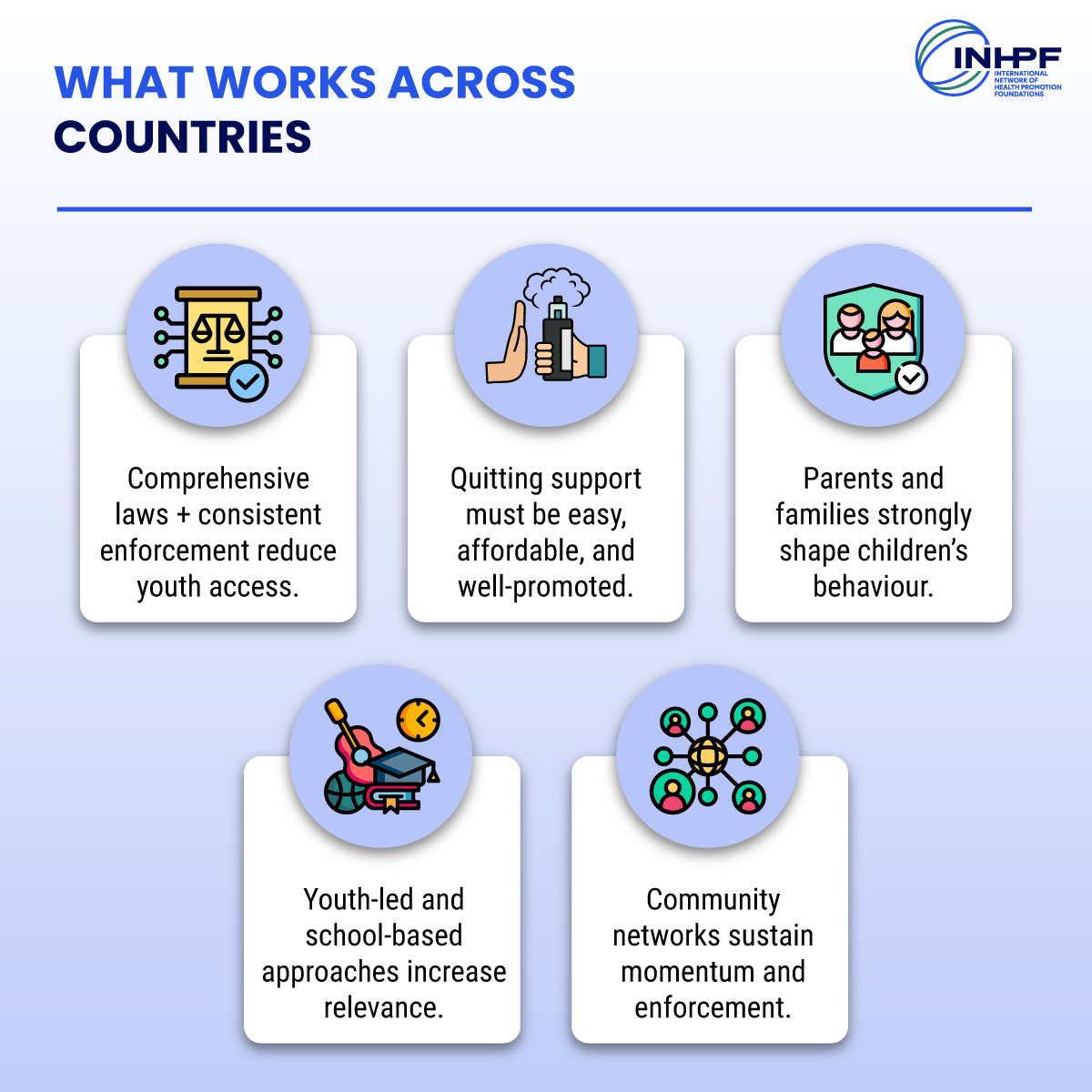
Comparative learning from Health Promotion Foundations highlights several approaches that show promise across different contexts:
- Comprehensive regulatory frameworks supported by consistent enforcement
- Accessible quitting support integrated across health services and digital platforms
- Family, school, and community engagement to shift norms early
- Youth-led and school-based prevention initiatives that increase relevance and credibility
- Cross-sector partnerships that sustain coordination and long-term impact
 Download
What Works Across Countries: Illustration highlighting effective approaches to reduce youth vaping, including regulation, family engagement, youth-led initiatives, and community networks.
While implementation varies, shared learning underscores the importance of coherence across policy, prevention, services, and community action.
How Health Promotion Foundations are responding
Across the INHPF, Health Promotion Foundations are applying multi-level strategies tailored to their local environments, including:
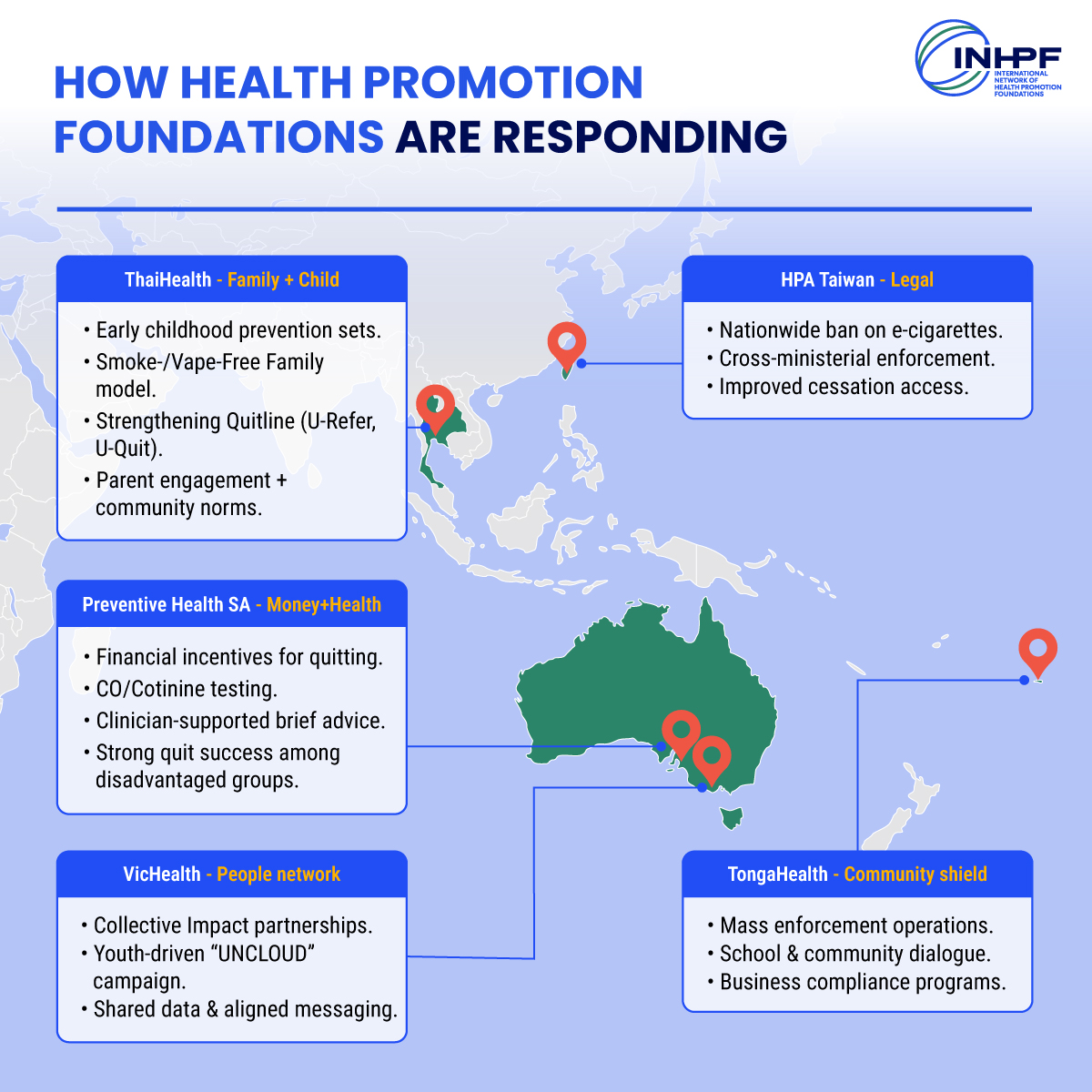
- Strengthening policy and enforcement mechanisms
- Integrating cessation support across clinics, quitlines, and referral systems
- Supporting parents, schools, and communities to create protective environments
- Enabling youth leadership and peer-based prevention
- Building partnerships across government, health systems, and civil society
These responses reflect the role of HPFs as system enablers, aligning actors and resources to protect children and young people.
Key insight
Youth vaping is not driven by a single factor—and it cannot be addressed through isolated solutions.
Sustainable impact depends on coordinated action across systems, sectors, and communities.
About the INHPF Insights Series
This content forms part of the INHPF Insights Series, which curates comparative learning and evidence-informed reflections from Health Promotion Foundations across different contexts. The series supports shared understanding and capacity building to address complex and emerging health promotion challenges globally.
What’s next
📘 For deeper analysis
Expanded findings—including system-level challenges, partnership insights, and emerging directions—will be featured in the INHPF Tobacco Control Report Card, launching in February 2026.
⬇️ Download this infographic
Explore how Health Promotion Foundations are responding to youth vaping through coordinated, system-level approaches.