



Overview
Youth mental health has become a critical global challenge as digital technologies reshape adolescent life. Social media and digital platforms create a paradox, enabling vital social connections while intensifying psychological distress. Health Promotion Foundations (HPFs) worldwide are adapting strategies to address digital-era mental health risks while using technology for prevention and early intervention.
This article examines how Thai Health Promotion Foundation(ThaiHealth) and Preventive Health SA tackle youth mental health in the social media age, highlighting two complementary approaches: Thailand’s digital innovation and early intervention focus, versus South Australia’s systemic reform and intersectoral policy emphasis.
The Rising Tide of Youth Mental Distress
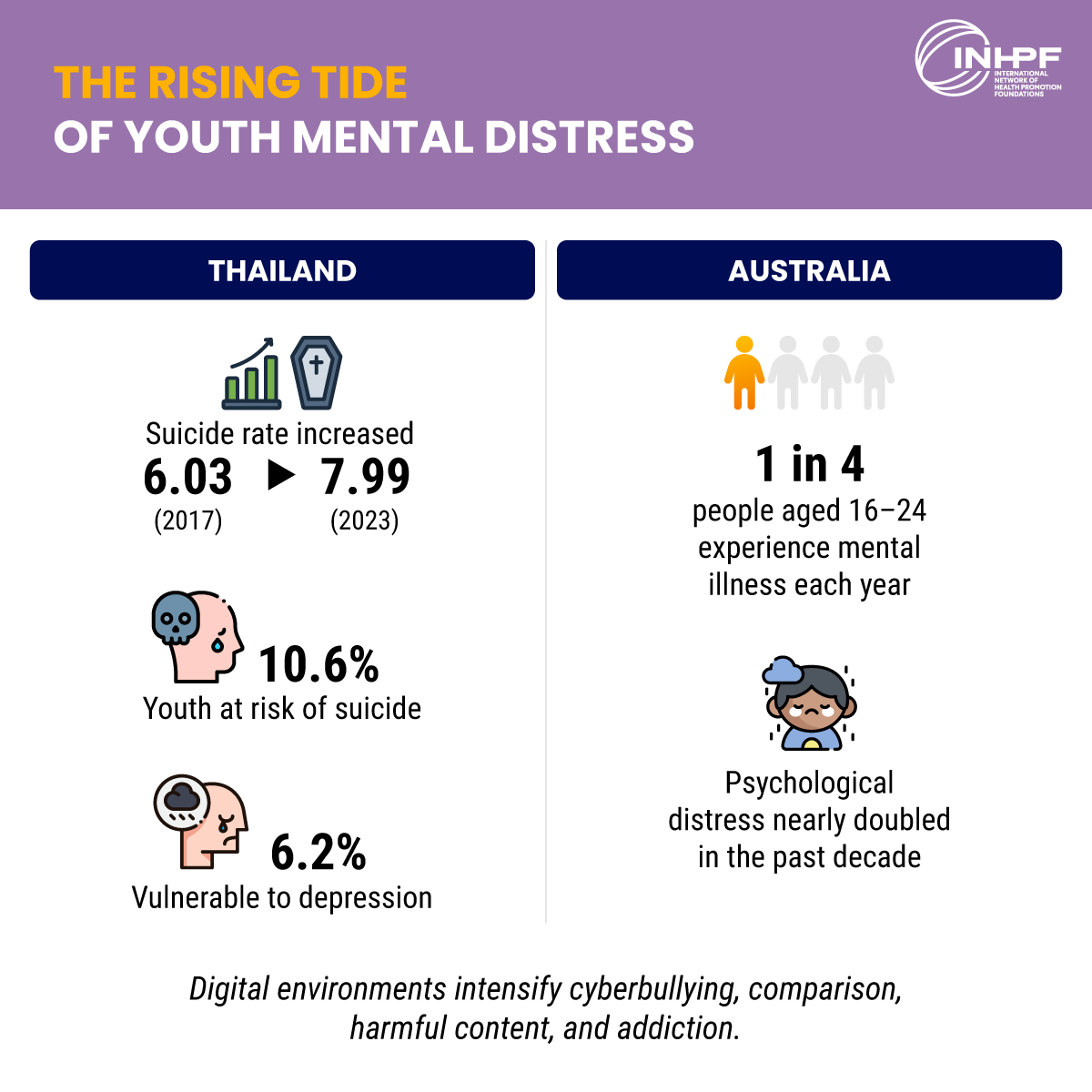
In Thailand, data from the Mental Health Epidemiological Survey 2023 indicate a sustained increase in suicide rates, rising from 6.03 per 100,000 population in 2017 to 7.99 per 100,000 in 2023. Among youth, 10.6% are identified as being at risk of suicide, while 6.2% are vulnerable to depression. These figures point to critical gaps in early detection, access to care, and mental health literacy.
According to data referenced by Preventive Health SA, 1 in 4 Australians aged 16–24 experiences mental illness each year. Psychological distress among young people has nearly doubled over the past decade, underscoring the scale and persistence of the issue.
Digital environments are a key factor in both countries. Daily social media use exposes young people to cyberbullying, harmful content, unrealistic comparisons, and addictive design. Youth describe platforms as both a “lifeline” for connection and a “pressure cooker” that amplifies anxiety, low self-esteem, and emotional vulnerability.
Two National Responses
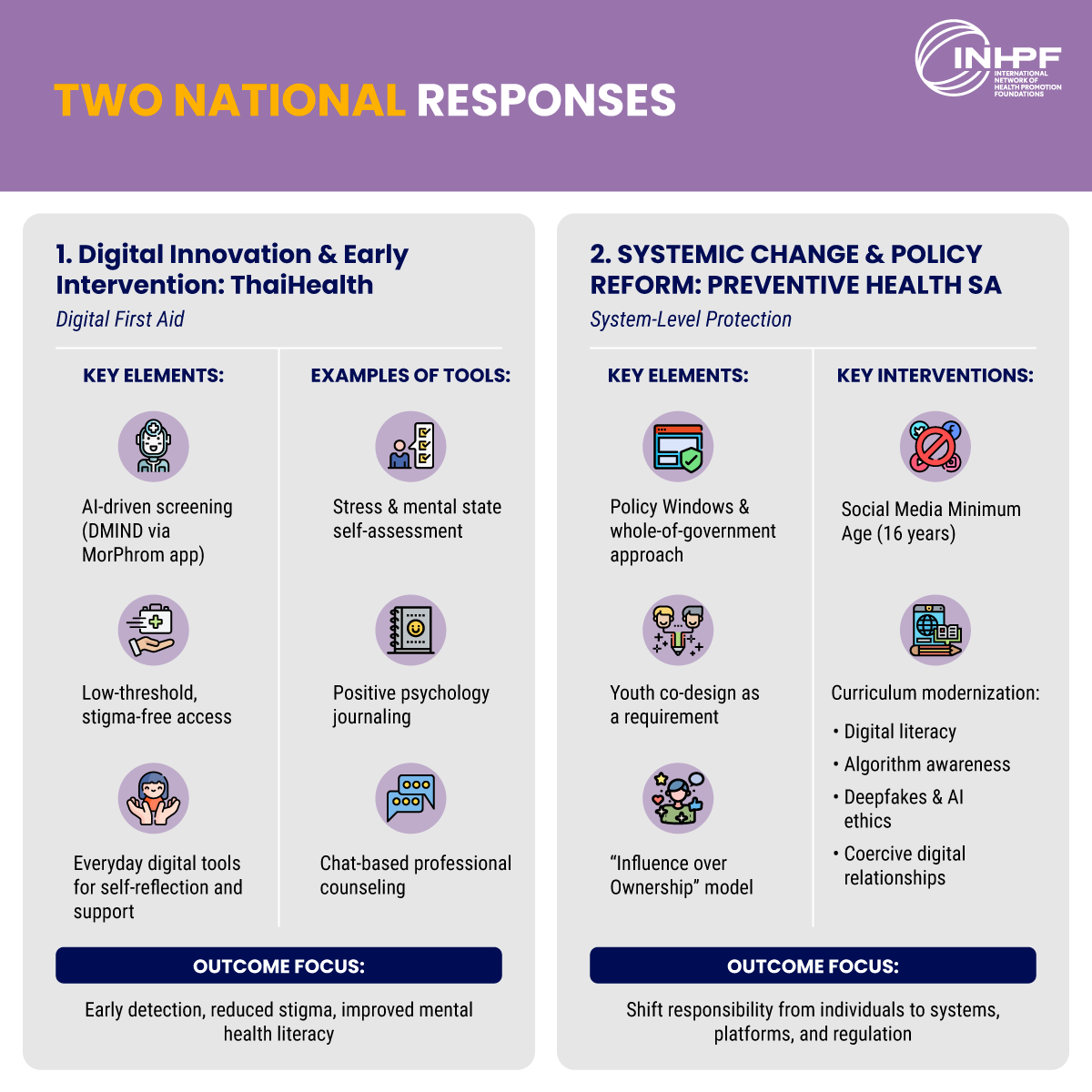
ThaiHealth’s Digital Innovation: Providing ‘Digital First Aid’
ThaiHealth has positioned digital technology as a central component of its mental health promotion strategy. Recognizing that young people are more likely to engage with support tools through familiar digital channels, ThaiHealth has focused on reducing barriers to access and stigma by integrating mental health support into everyday technology use.
AI-Driven Screening: The DMIND Project
A flagship initiative is DMIND (Depression Monitoring for Intelligence), an AI-based screening tool developed with Chulalongkorn University. DMIND analyzes facial expressions and vocal characteristics during brief interactions to identify potential depressive symptoms. Integrated into Thailand’s national “MorPhrom” app, it enables large-scale, low-threshold mental health screening without clinical visits, particularly valuable for youth who may avoid formal psychiatric services due to stigma or fear of judgment.
Digital First Aid and Self-Reflection Tools
Beyond screening, ThaiHealth has introduced a suite of “Mental Well-being Tools” designed for daily use:
- Persona Health: Allow users to assess their stress levels and mental state through interactive questionnaires.
- Journal Jourjai & Bucket Fillers: Focus on positive psychology, encouraging youth to practice self-reflection and “fill their buckets” with positive affirmations to combat the “negative noise” of social media.
- Here to Heal: Provide professional mental health counseling via a chat-based interface, offering immediate support for those in distress.
These tools aim to reduce stigma and strengthen mental health literacy. By enabling youth to self-monitor and access support through familiar technology, ThaiHealth is lowering barriers to early intervention for a digitally connected generation.
Preventive Health SA: The Power of Systemic Change and Policy
While Thailand leads in digital tool deployment, Preventive Health SA takes a broader systems approach. Its strategy recognizes that youth mental well-being is shaped not only by individual behavior but by education systems, regulatory frameworks, and commercial digital practices.
Strategic Use of Policy Windows
Preventive Health SA utilizes “Policy Windows” to drive legislative reform by aligning youth mental health with heightened government and public concern about online safety. A significant milestone was the South Australian Social Media Summit 2024, which convened policymakers, researchers, and the technology sector to reposition mental health as a whole-of-government issue and embed well-being considerations across legislative and policy frameworks.
The “Influence over Ownership” Model and Youth Co-design
Under its “Influence over Ownership” model, Preventive Health SA acts as a strategic convener, bringing together various agencies to address mental health challenges collectively. The foundation asserts Youth Co-design for any mental health program to maintain credibility and ensures that interventions are not merely “top-down” impositions but reflect the lived digital experiences of the younger generation.
Legislative Reforms: Minimum Age for Social Media
A key systemic shift is the advocacy for the Online Safety Amendment (Social Media Minimum Age) Bill (Effective 10th Dec, 2025), which proposes a minimum age of 16 for social media ownership to mitigate the impact of addictive algorithms on the developing adolescent brain. This represents a shift from individual responsibility to corporate and legislative accountability.
Curriculum Modernization
Complementing legislation, Preventive Health SA has influenced education policy by integrating advanced “Digital Literacy and Safety” modules into school curriculums. This approach moves beyond basic internet safety and equips students with the critical thinking skills to navigate complex digital threats, including:
- Deepfakes and AI Ethics: Understanding and identifying manipulated digital content.
- Coercive Control: Recognizing unhealthy and manipulative digital relationships.
- Algorithm Literacy: Developing an awareness of how digital platforms shape behavior and self-perception.
Synthesis of Approaches: A Multidimensional Strategy for Youth Mental Health
Thailand and South Australia offer complementary models that together form a comprehensive approach to youth mental health in the digital age.
Two Complementary Tracks
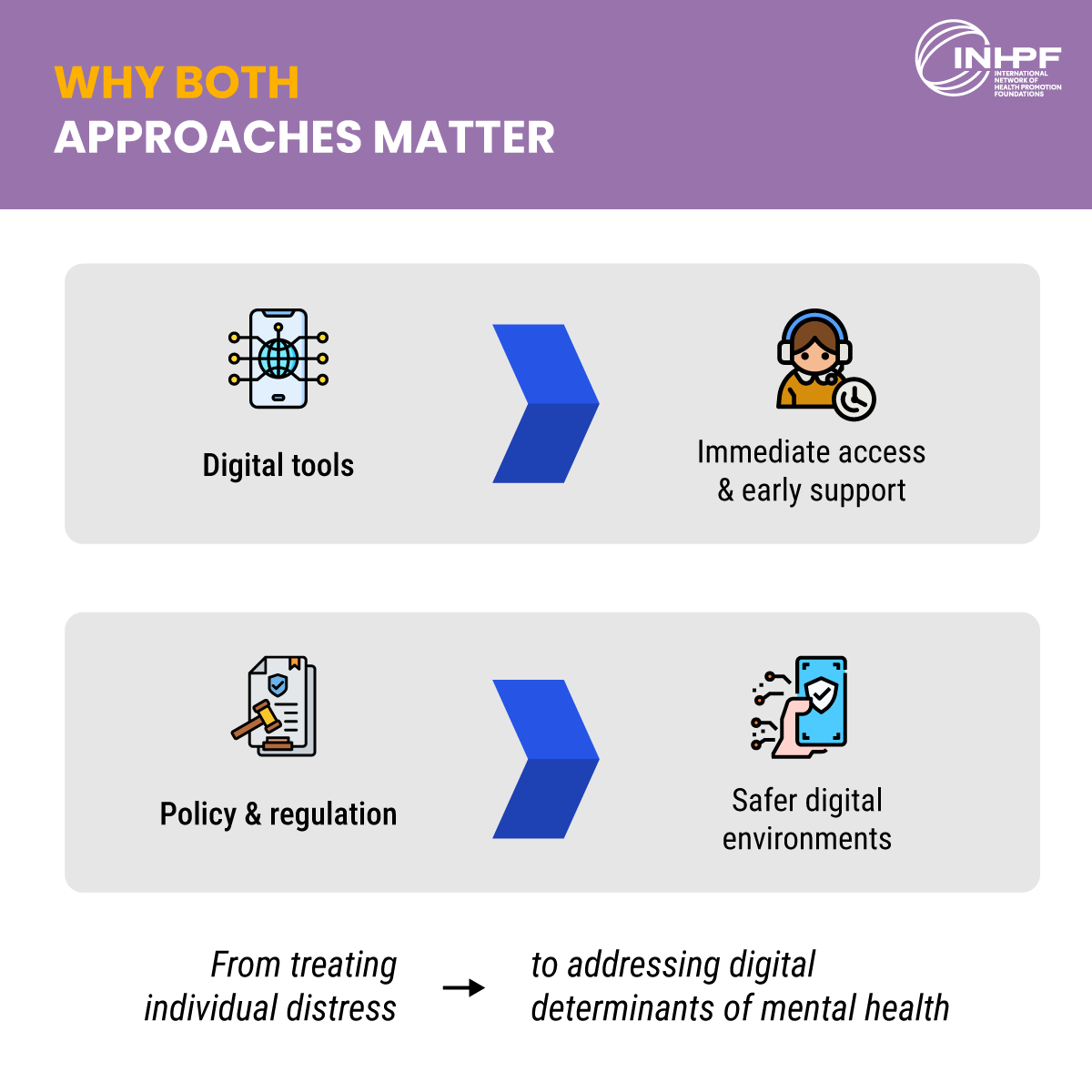
Thailand’s direct access model provides immediate support through AI screening and chat-based services, catching individuals early and reducing barriers to care.
South Australia’s systems model builds protective infrastructure through legislation and regulation, making digital environments inherently safer for young people.
Together, they shift from treating individual pathology to addressing environmental factors—recognizing that mental well-being is shaped by digital platforms, not just individual resilience.
Key Operational Principles
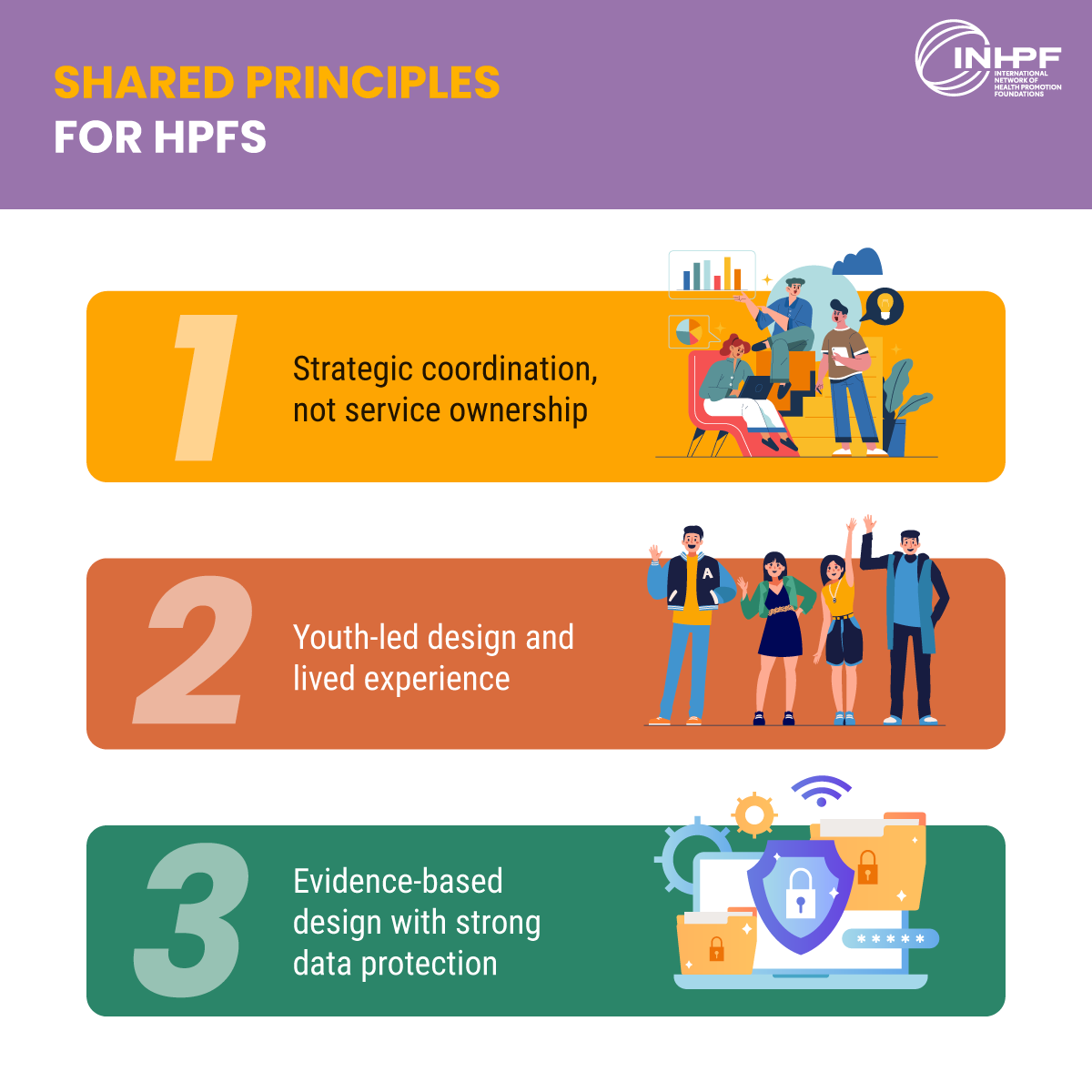
Both approaches share three core principles for effective implementation:
- Strategic coordination over service ownership
Health promotion foundations act as conveners rather than direct service providers. ThaiHealth partners with universities and tech developers, while Preventive Health SA embeds mental health across education, justice, and digital regulation. - Youth-led design
Young people must drive the agenda from tool development to policy summits. This ensures interventions are credible, authentic, and aligned with lived experience. - Evidence-based design with rigorous data protection
Digital tools must meet strict privacy standards (PDPA and international frameworks) while remaining functional, accessible, and engaging for diverse populations.
The Path Forward: A Mentally Healthy Future
- Data-Driven Empathy: Using data and AI to identify those at risk, but ensuring that data security and “Human-Centered Design” are at the forefront to protect privacy and build trust.
- Scalability & Sustainability: Moving from small pilot projects to integrated national policies. Mental health must be part of every school curriculum and every digital regulation.
- Engagement over Information: Engaging, interactive, and rewarding digital experiences that compete with the very apps that cause them stress.
Conclusion
The experiences of ThaiHealth and Preventive Health SA demonstrate that responding to youth mental health challenges in the digital age requires complementary strategies operating at different levels.
ThaiHealth illustrates how digital innovation can reduce barriers to access and stigma through AI-enabled screening and user-centred mental well-being tools, providing timely “Digital First Aid” for early identification and self-management. Preventive Health SA highlights the importance of policy-led, intersectoral approaches that shift responsibility beyond individuals toward education systems, digital platforms, and regulatory frameworks through legislative reform, curriculum modernization, and youth co-design.
Together, these approaches reflect a shift from a medical model toward a social and systems-based model of mental health promotion. For health promotion foundations globally, integrating digital accessibility with strong policy infrastructure offers a practical pathway to addressing both immediate mental distress and the broader digital determinants shaping youth mental well-being.
Download the full infographic
Explore how Health Promotion Foundations respond to youth mental health challenges in the social media age through digital innovation, early intervention, and system-level policy action.
Read next
Explore how policy design determines impact in front-of-pack nutrition labelling — from voluntary endorsement systems to mandatory graded models — and what this means for transparency, industry reformulation, and long-term NCD prevention.
Shaping Healthier Food Systems Through Front-of-Pack Nutrition Labelling
Explore the Network
Explore the INHPF network and how Health Promotion Foundations collaborate globally to advance health and equity.
More insights from the Network
Visit our Insights page to explore case studies, strategies, and evidence from member organizations.