


Why Food and Physical Activities Matter for Equity
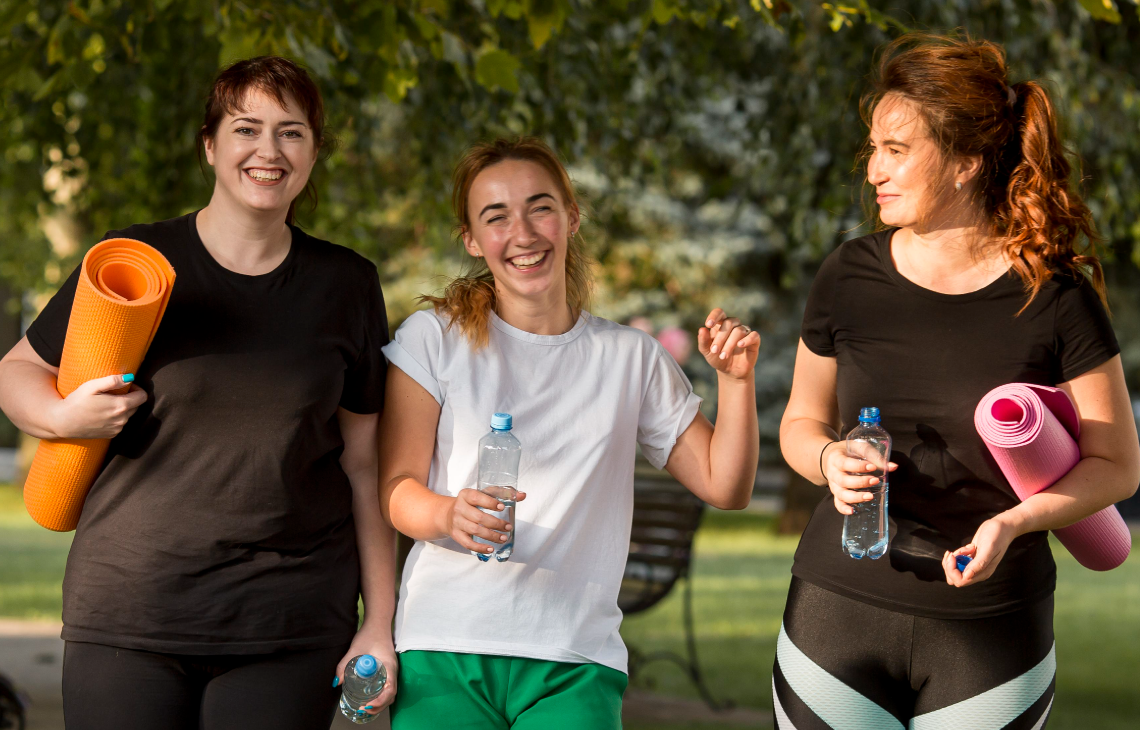
Food and physical activity are not just matters of personal choice, but deeply influenced by the environments in which people live, work, and play. When healthy food is affordable and available, and when safe spaces for physical activities are accessible, individuals and families are more likely to enjoy good health. Conversely, when these conditions are absent, inequities grow.
Unhealthy diets and sedentary lifestyles are major risk factors for non-communicable diseases (NCDs) such as diabetes, cardiovascular disease, and some cancers. These risks do not affect everyone equally. Low-income households often struggle to afford nutritious food, while rural and remote communities face limited access due to higher prices and weaker supply chains. Gender and cultural norms can also limit participation in sport and exercise, especially for women and minority groups. The result is that those who are already disadvantaged are more likely to experience poorer nutrition, lower levels of physical activity, and higher rates of chronic disease.
Because of these patterns, food and physical activities act as powerful drivers of health inequities. Addressing them requires changes in policy, environments, and community systems to ensure that healthier choices become realistic, affordable, and appealing options for all. This is where Health Promotion Foundations (HPFs) have stepped in. By investing in healthier food systems and more inclusive physical activity opportunities, HPFs work to level the playing field, reducing the unjust differences in health outcomes that stem from income, geography, gender, or culture.
HPF Strategies to Reduce Inequities
Policy and Environment
The Government of South Australia introduced a landmark policy to restrict unhealthy food and drink advertising on public transit assets. The policy commenced in July 2025 and aims to reduce children’s exposure to harmful marketing and support healthier eating behaviors.
Thai Health Promotion Foundation (ThaiHealth) advanced the Healthier Choice nutrition symbol, which sets product standards for reduced sugar, fat, and sodium. By collaborating with food manufacturers, retailers, and vending machine operators, this initiative increases the availability of healthier options and helps consumers make informed decisions.

Health and Wellbeing Queensland (HWQld) embedded equity into all programs and policies, and is guided by an Equity Framework. This includes embedding equity into its obesity prevention (Making Healthy Happen 2032), food security (Gather + Grow 2032), and other initiatives. The approach emphasizes supportive environments and prioritizes communities that unfairly face disproportionate challenges to a healthy life, including Aboriginal and Torres Strait Islander peoples and remote communities. HWQld is also a prescribed stakeholder to the Making Tracks to Health Equity Strategies to support Aboriginal and Torres Strait Islander people to improve health outcomes in all Queensland Hospital and Health Services.
Singapore Health Promotion Board (HPB) enforces Whole-of-Government healthier catering and beverage policies, ensuring healthier menus at government-organized functions and reducing sugar consumption across public sector workplaces.
Community-Led Interventions
The Korea Health Promotion Institute (KHEPI)’s NutriPlus Program delivers personalized nutrition services for vulnerable groups, including pregnant women and young children at risk of anemia or low weight. Implemented through local health centers, it provides education, counseling, and supplemental food packages, ensuring access to better nutrition at the community level.
Preventive Health SA supported the Neighborhood Nature Project with Nature Play SA, activating low-income neighborhoods through outdoor trails that combine physical activity, nature connection, and Aboriginal cultural knowledge. Preventive Health SA’s Physical Activity Community Grants supported community-led initiatives by local councils that encourage active living, improve access to physical activity opportunities within their area, and build local capacity to create environments that make it easier for South Australians to move more in their everyday lives.
HWQld’s Gather + Grow Strategy and Action Plan support food security in remote Aboriginal and Torres Strait Islander communities by investing in community planning across remote communities to identify locally led food production and healthy environment initiatives, including projects related to remote supermarkets, aquaponics, hydroponics, and community gardening.
Tonga Health Promotion Foundation (TongaHealth)’s Fun Shake Zumba Program provided free Zumba sessions in underserved districts, while training community volunteers to continue the program. This approach improved access to physical activity and created safe, social spaces, with participants reporting significant weight loss and stronger community bonds.
Preventive Health SA partnered with the Department for Education to develop the Right Bite Food and Drink Supply Standards for South Australian schools and supported the Premier’s Be Active Challenge (for secondary schools), strengthening the evidence base and cross-sector collaboration to promote healthier school food environments and increased physical activity among students. Preventive Health SA’s South Australian Population Health Survey (SAPHS) monitoring systems provide comprehensive, ongoing data on population health and lifestyle risk factors to inform policy and program development, with a recent module cross-referencing screen time and sedentary behaviour among young people to assess potential impacts and monitor program response impacts of the Online Safety Amendment (Social Media Minimum Age) Act 2024, which will introduce a national minimum social-media age of 16 from December 2025.
School and Youth Programs
The Western Australian Health Promotion Foundation (Healthway) funds KIDDO, a physical literacy program that equips educators and parents to build children’s movement skills from early childhood through primary school. Scholarships are targeted at low-income and culturally diverse communities to reduce disparities in access.
HPB runs the Healthy Meals in Schools Program, ensuring all school canteens follow nutrition guidelines, and the Active Youth Program, which integrates fun, structured physical activity into daily school life.
HWQld’s Pick of the Crop initiative connects schools with local farmers to increase access to fruits and vegetables, promoting healthy eating habits in children, particularly in disadvantaged areas.
The Victorian Health Promotion Foundation (VicHealth) designed Future Active, where young people co-created safe, inclusive activity spaces in local neighborhoods. The program prioritized marginalized youth groups, including those from low-income, rural, and multicultural backgrounds.
Health Literacy and Social Marketing
VicHealth’s This Girl Can – Victoria campaign directly tackled women’s fear of judgment in sport and physical activities. By featuring real women of diverse ages, body types, and cultural backgrounds, it encouraged hundreds of thousands to become more active and challenged gender stereotypes.
HWQld invests in prevention programs to support the adoption of healthier behaviors for all Queenslanders.10,000 Steps and My Health for Life are two examples reaching into households, communities, and workplaces with knowledge and skill development and incentives to take personal action for better health. HWQld has also supported the promotion of healthy behaviors through its partnership with Community Enterprise Queensland (a grocery retailer in remote Queensland). Through this partnership, HWQld has supported health promotion and health campaigns in remote communities.
ThaiHealth’s Food as Medicine project used local knowledge of Thai herbs and food traditions to improve public food literacy, train restaurants to offer healthier menus, and promote the value of food-based health tourism.
HPB uses its Healthier Choice Symbol, Nutri-Grade labeling, and Eat Drink Shop Healthy Challenge to inform and motivate healthier food purchases. These initiatives combine clear labeling, public education, and gamified rewards to influence consumer demand.
Preventive Health SA has implemented the LiveLighter campaign to highlight the hidden health risks of poor diet and obesity. The campaign aimed to raise awareness of healthier choices to reduce the risk of chronic diseases linked to excess weight. A series of community activation events complemented the media campaign, encouraging South Australians to engage directly with healthy eating and active living messages.
Cross-Sector Partnerships
The Health Promotion Administration (HPA) established Community Nutrition Promotion Centers in Taiwan by funding local governments to hire dietitians, deliver nutrition education, and provide elderly-friendly meals.
HWQld’s strategies rely on broad partnerships across sectors, bringing together government agencies, community groups, NGOs, health and social services, universities, and industry partners. This whole-of-system collaboration ensures that obesity prevention and food security are addressed from multiple angles, from policy reform and service delivery to research and community action. To support this, HWQld has established two cross-government technical working groups related to food security.
HPB’s Healthy Workplace Ecosystem collaborates with landlords, developers, and companies to deliver healthier food, physical activities, and health screenings directly in workplaces. Today, over 80 workplace ecosystems are active nationwide.
TongaHealth’s Fiefia Tonga Sports partners with ministries, commissions, and NGOs to host inclusive workplace sports events that reach both public servants and private sector employees, addressing high obesity and inactivity rates across the workforce.
Preventive Health SA’s Wellbeing Hubs and Regional Preventive Health Partnerships provide opportunities for partnership between different levels of government to promote community wellbeing through a range of place-based initiatives. These initiatives are community-led and community-driven, and provide opportunities to increase community activation for physical activity, food education and access to local healthy food environments.
Real Impact on Equity
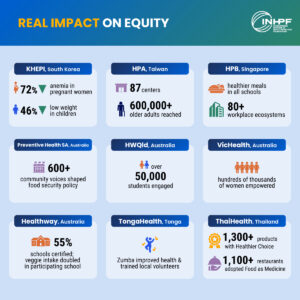
- KHEPI – NutriPlus Program: In 2023, over 61,000 pregnant women, infants, and young children from low-income households received tailored nutrition support. Outcomes included a 72% reduction in anemia among pregnant women and a 46% decrease in low weight among young children, showing how targeted interventions can close health gaps early in life.
- HPA – Community Nutrition Promotion Centers: By hiring community dietitians and establishing 87 centers nationwide, HPA reached more than 600,000 older adults with nutrition education and elderly-friendly meals. This improved access for seniors facing oral health and mobility barriers, helping to prevent frailty and chronic disease.
- HPB – Healthy Meals in Schools & Healthy Workplace Ecosystem: In schools, healthier canteen meals became the default, improving nutrition for all students regardless of background. In workplaces, more than 80 Healthy Workplace Ecosystems now provide free exercise classes, health talks, and screenings, bringing services directly to employees—including those in lower-income jobs with limited access to health resources.
- Preventive Health SA – Creating a Secure Food System in South Australia Project: More than 600 community and stakeholder voices were captured to guide solutions for a secure food system. This consultation process highlighted the key priorities of those with lived experience and ensured that their insights played a central role in shaping the outcomes.
- HWQld – More than 220 schools implemented the Pick of the Crop program in 2025, reaching over 50,000 students, while 90 community-led initiatives promoted healthier eating and physical activity. In Bundaberg, a place-based initiative engaged over 25,000 community members, showing how systemic strategies can benefit both regional and disadvantaged groups. Funding has been provided for the planning of physical activity and food security infrastructure across 19 discrete communities, predominantly comprising First Nations populations, to encourage equitable health outcomes. Deadly Choices delivered 617 health education and health promotion programs with 6,852 participant completions. 2,543 of these participants in these programs received a 715 Annual Health Check. Additionally,127 community and sporting events were delivered, with 20,571 attendees.
- VicHealth – This Girl Can – Victoria: The campaign helped hundreds of thousands of women overcome fear of judgment in sport and fitness. By featuring diverse body types, ages, and cultural backgrounds, it directly challenged inequities in participation and created a more inclusive sporting culture.
- Healthway – Crunch&Sip®: Over half of WA’s primary schools are now certified as Crunch&Sip® schools. Evaluations show that during a 10-week vegetable focus, the share of children bringing vegetables to school more than doubled (21% → 46%), demonstrating real change in children’s eating habits.
- TongaHealth – Fun Shake Zumba: Community Zumba classes brought physical activity to underserved districts, with participants reporting weight loss and improved confidence. Volunteers trained to sustain the program strengthened community capacity, ensuring lasting benefits in areas with high obesity prevalence.
- ThaiHealth – Healthier Choice Symbol and Food as Medicine: Over 1,300 products now carry the Healthier Choice label, giving consumers more access to reduced-sugar, fat, and sodium options. In parallel, more than 1,100 restaurants adopted “Food as Medicine” standards, and 95% of participants in national expos reported improved knowledge on healthy eating.
HPFs not only improve overall health outcomes but also reduce disparities by targeting vulnerable populations, reshaping environments, and ensuring equal access to food and physical activities.
Why This Works
Community ownership and relevance
KHEPI’s NutriPlus Program succeeds because it is delivered through local health centers with continuous education and counseling, ensuring services are trusted and embedded in communities.
TongaHealth’s Fun Shake Zumba thrived by training community volunteers, turning a short-term initiative into a sustainable, locally-led program.
Preventive Health SA’s Food Environments and associated food security project elevated lived experience voices, ensuring solutions reflected real community needs.
Whole-of-system approaches
HWQld’s Making Healthy Happen 2032 strategy stands out because it integrates food supply reforms, physical activity promotion, and healthcare support, with cross-government and cross-sector collaboration. In addition, Gather + Grow Food Security Strategy is supporting collaborative, cross-sector action on food security. It is working with 14 agencies across all levels of government to deliver actions that will holistically support remote Aboriginal and Torres Strait Islander food systems.
HPB’s Whole-of-Government healthier catering and beverage policies show how systemic change can shift entire environments toward healthier norms.
ThaiHealth’s Healthier Choice Symbol works at the food system level, incentivizing reformulation across the industry.
Inclusivity and tackling barriers
VicHealth’s This Girl Can – Victoria challenged cultural and gender stereotypes, helping women overcome fear of judgment and making physical activity more inclusive.
HPA’s Community Nutrition Promotion Centers addressed barriers like missing teeth and swallowing difficulties in older adults, offering texture-modified meals and accessible dietary support.
Healthway’s Crunch&Sip® embedded daily healthy eating breaks in schools, ensuring children have regular access to healthy eating throughout the school day.
Partnerships and shared leadership
KHEPI’s Senior Strength & Balance Program collaborated with local health centers and trained professionals to prevent falls and promote healthy aging.
ThaiHealth’s Healthier Choice Symbol has driven product reformulation through close collaboration with food manufacturers, regulators, and retailers.
HPB’s Healthy Workplace Ecosystem leveraged partnerships with landlords and employers, expanding to more than 80 ecosystems across Singapore.
Evidence, monitoring, and adaptation
KHEPI’s NutriPlus and Healthway’s Crunch&Sip® are grounded in continuous monitoring and evaluation, ensuring interventions adapt to community needs and remain effective.
ThaiHealth continuously evaluates and updates criteria for the Healthier Choice label, ensuring ongoing relevance and industry compliance.
Preventive Health SA commissioned the South Australian Health & Medical Research Institute (SAHMRI) to evaluate the placement and promotion of unhealthy food and drinks in South Australian supermarkets, creating a robust evidence base to inform potential policy positions on retail food environments and guide the agency’s future obesity-prevention and health-promotion initiatives.
HPFs succeed not by isolated projects, but by combining community trust, systemic reforms, inclusive design, strong partnerships, and evidence-based adaptation.
Moving Forward
- Deepen community engagement: Continue empowering communities, especially Indigenous peoples, low-income households, and women, to co-design interventions.
- Strengthen systemic policies: Scale up measures such as healthier food labeling, marketing restrictions, and urban design that make physical activity safer and more accessible.
- Expand cross-sector collaboration: Involve education, housing, transport, and private industry alongside health to tackle the social determinants of inequity.
- Invest in monitoring and evaluation: Use data to demonstrate cost-effectiveness, guide improvement, and ensure that programs reach those most in need.
- Share lessons globally: Facilitate exchange between HPFs and partners across countries to replicate proven approaches in new contexts.
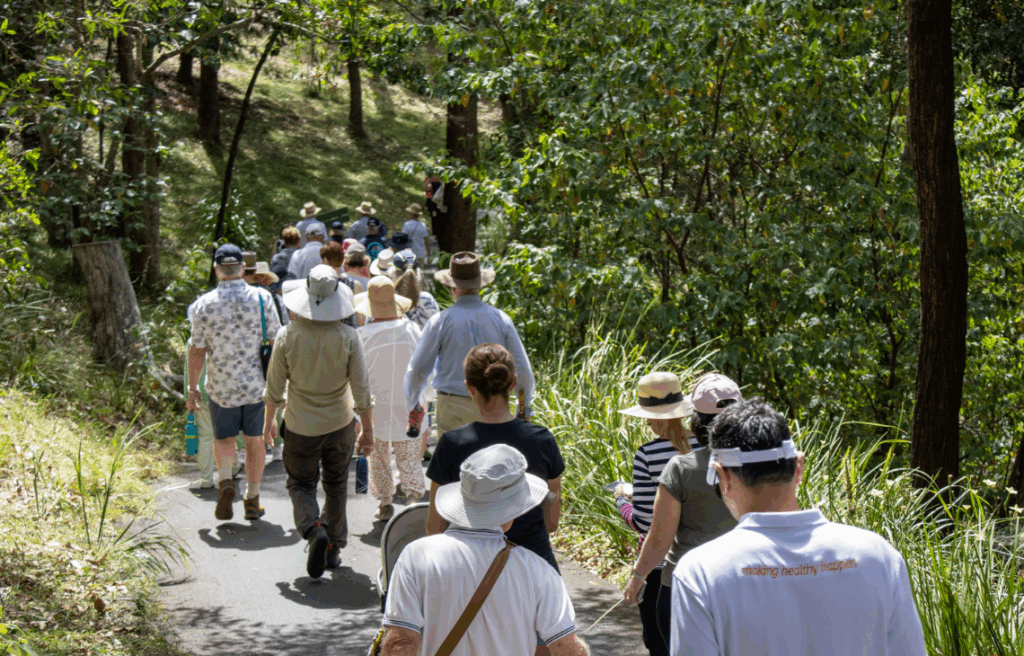
By changing systems while supporting communities, HPFs can continue to close unjust health gaps and build a future where everyone, regardless of income, geography, gender, or culture, has a fair chance at healthy living.
Download the full infographic
Explore how Health Promotion Foundations across Asia-Pacific are tackling health inequities through food and physical activities.
Download Full Infographic (PDF)
Read next:
Discover how Health Promotion Foundations are adapting health promotion to modern lifestyles in Designing Interventions for Fast-Paced Lives.