

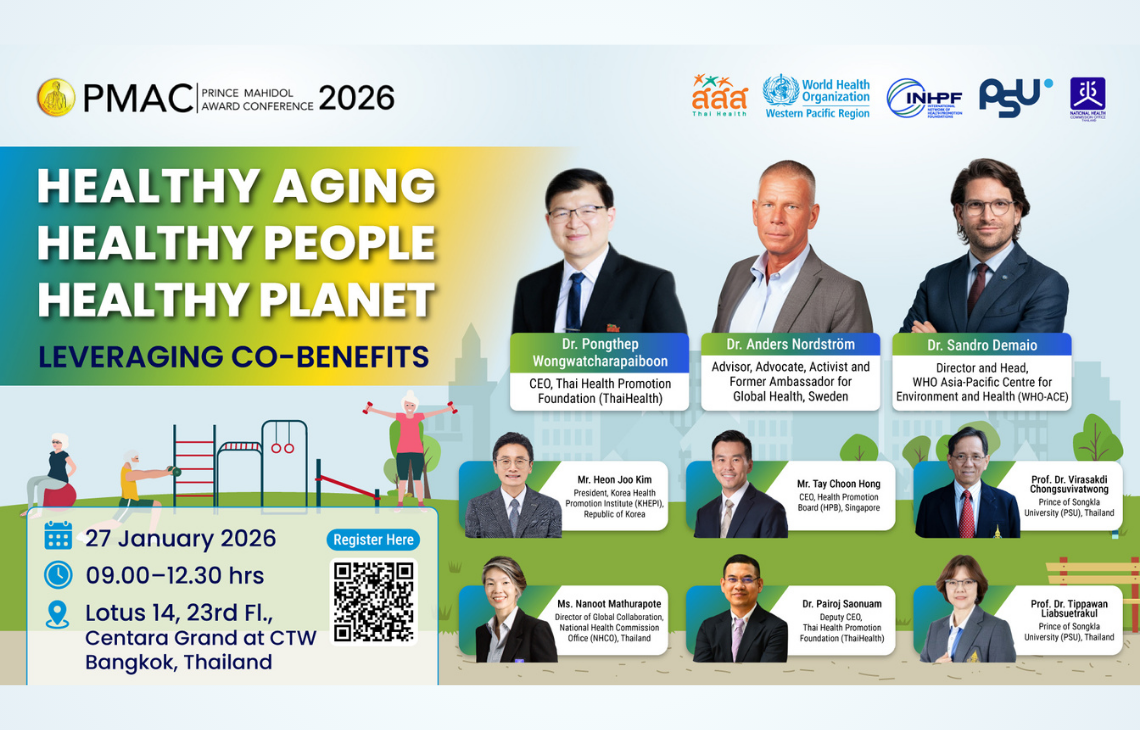
Why Co-Benefits Matter for the Asia-Pacific Region
The Asia-Pacific region is facing a convergence of major challenges: rapidly aging populations, accelerating climate change, and a rising burden of noncommunicable diseases (NCDs). These pressures do not occur in isolation. Instead, they interact in ways that amplify health inequities and strain health systems—particularly for older adults and marginalized populations. Addressing these interconnected challenges requires policy approaches that move beyond sectoral silos and deliver benefits across multiple domains.
Co-Benefits as an Integrated Policy Approach
Against this backdrop, a policy-focused side meeting at the Prince Mahidol Award Conference (PMAC) 2026 explores the concept of co-benefits—policies and actions that simultaneously improve human health, advance equity, and protect the environment. Rather than treating climate change, aging, and NCD prevention as separate agendas, co-benefits emphasize integrated solutions that generate health, social, and environmental gains at the same time.
This approach is increasingly recognized as critical for building resilient communities and sustainable health systems in the context of demographic transition and planetary pressures.
Focus of the PMAC 2026 Side Meeting
The session, “Healthy Aging, Healthy People, Healthy Planet – Leveraging Co-Benefits,” examines how climate-related actions can accelerate progress toward healthy aging and NCD prevention. Key entry points include:
- Improving air quality
- Strengthening resilient and equitable food systems
- Adapting to extreme heat
- Promoting physical activity through supportive environments
Together, these areas demonstrate how environmental and social policies can shape healthier living conditions across the life course while also contributing to planetary sustainability.
Convening Policy Dialogue Across Sectors
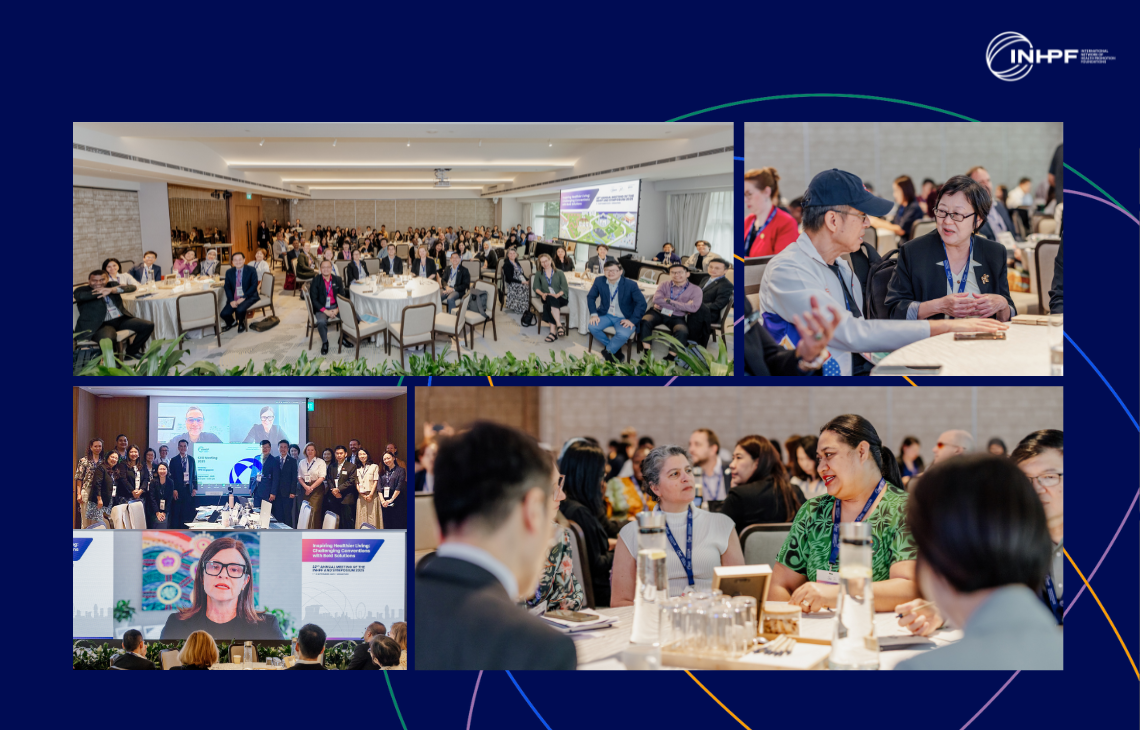
Co-organized by the Thai Health Promotion Foundation (ThaiHealth), the WHO Asia-Pacific Centre for Environment and Health (WHO-ACE), the International Network of Health Promotion Foundations (INHPF), Prince of Songkla University (PSU), and the National Health Commission Office (NHCO Thailand), the session brings together PMAC participants and invited leaders from across the Asia-Pacific region.
Discussions highlight real-world examples of co-benefits in action and explore governance approaches that help ensure these policies reach aging and underserved populations, with particular attention to equity and system-level impact.
Aligning with Global Policy Windows
The timing of this dialogue aligns with key global policy moments, including the UN High-Level Meeting on NCDs (2025) and COP31 (2026). By linking climate action, healthy aging, and NCD prevention, the session contributes to advancing integrated policy approaches that support healthier, more equitable, and more sustainable societies.
Looking Ahead
This discussion reflects the International Network of Health Promotion Foundations’s ongoing work to advance integrated policy approaches that connect healthy aging, equity, and planetary health. Through cross-country learning and policy dialogue, INHPF supports health promotion foundations in addressing complex, interlinked challenges across sectors and systems.
Further perspectives on climate–health co-benefits, NCD prevention, and system-level governance can be found in INHPF’s Insights collection, which brings together knowledge, experience, and practical learning from health promotion foundations worldwide.
Learn more about INHPF and its member organizations and how the Network works together to strengthen health promotion and prevention globally.