


Why Front-of-Pack Labelling Matters
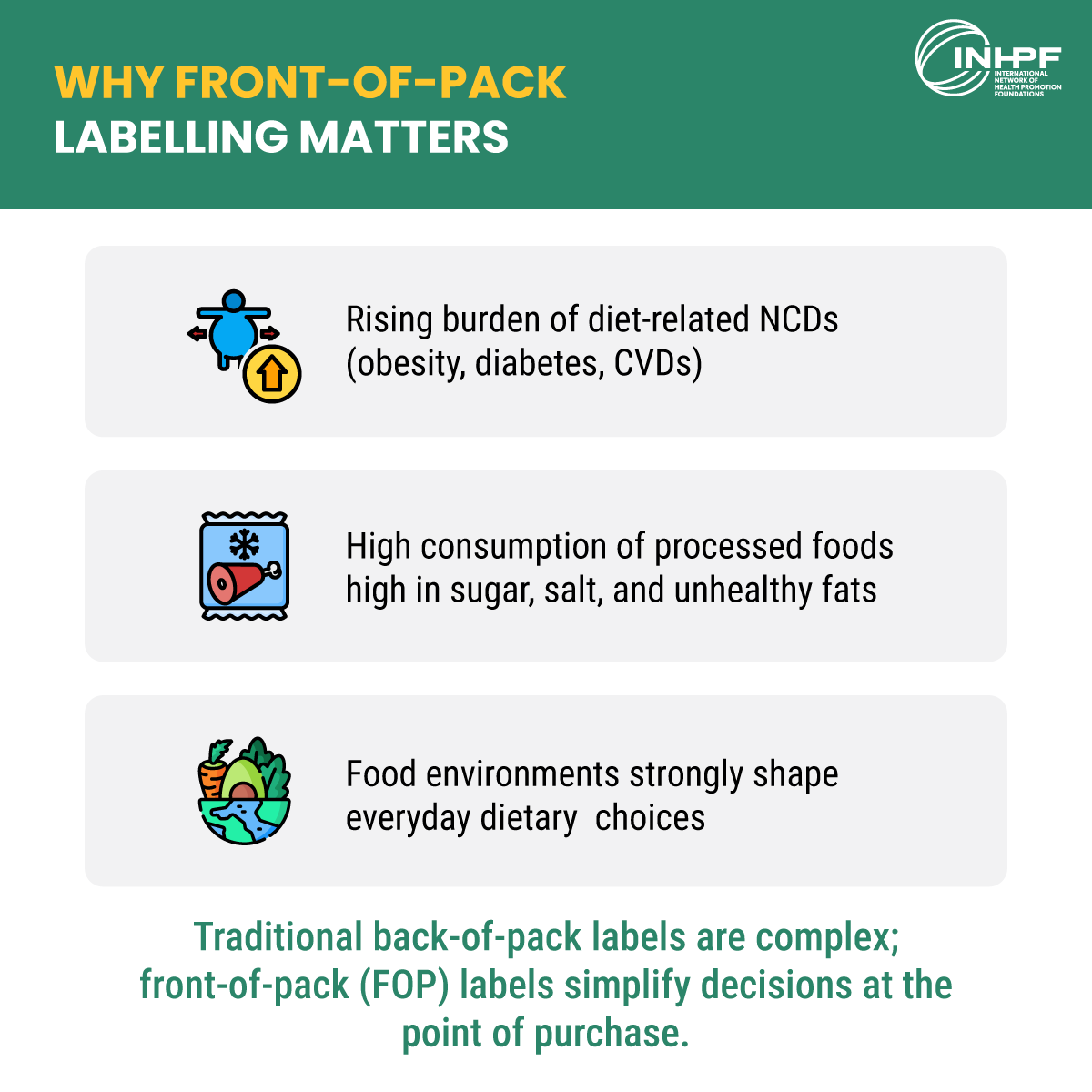
Non-communicable diseases (NCDs) are a growing global public health challenge, increasingly driven by diets high in ultra-processed foods containing excessive sugar, salt, and unhealthy fats. In the Asia-Pacific region and Australia, rising overweight and obesity rates place sustained pressure on health systems, highlighting the need for preventive, system-level action beyond individual treatment.
Front-of-pack (FOP) nutrition labelling addresses this by simplifying nutritional data into intuitive visual guides; Thailand’s Healthier Choice logo, Singapore’s Nutri-Grade, or Australia’s Health Star Rating, enabling quick, informed choices at purchase. Beyond consumer empowerment, FOP labelling drives industry reformulation. To earn favorable ratings or avoid restrictive grades, manufacturers reduce sugar, sodium, and unhealthy fats. This article examines how Thailand, Singapore, and Australia use different labelling approaches to shape healthier, more transparent food systems.
Front-of-Pack Labelling as a Food System Intervention
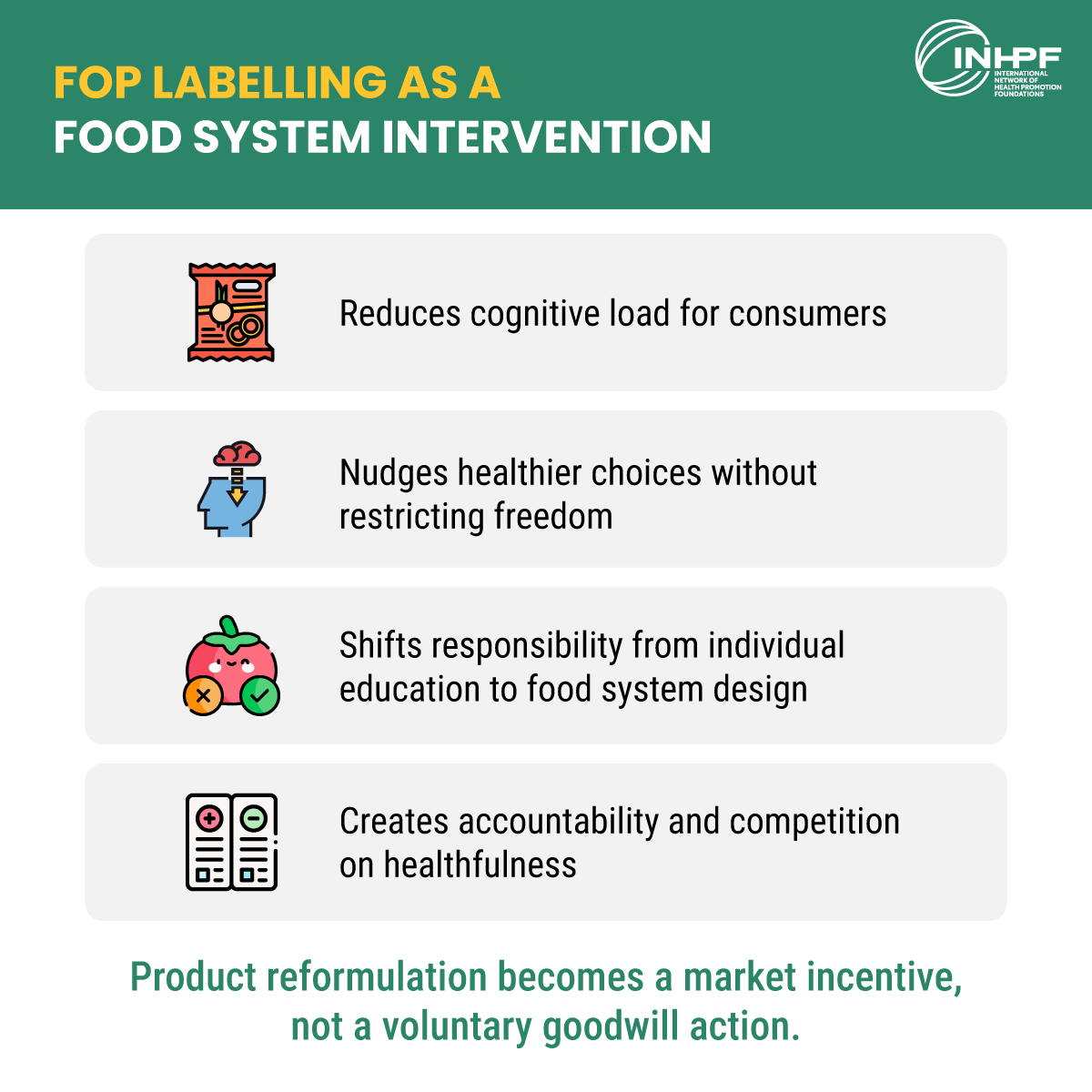
Front-of-pack (FOP) nutrition labelling represents a shift from information provision to active food system intervention. Traditional nutrient tables are hard to interpret. FOP systems provide intuitive visual cues at the point of purchase, where decisions are made easier
Critically, FOP labelling shifts responsibility from individuals to systems, addressing the food environment – the physical and economic context shaping dietary choices. Product reformulation is a key mechanism: labels like Thailand’s Healthier Choice Logo and Singapore’s Nutri-Grade create market incentives for healthier products, with Singapore manufacturers developing lower-sodium and lower-sugar alternatives to qualify for positive ratings. In Australia, mandatory labelling holds companies accountable, forcing manufacturers to compete on healthfulness across entire product lines rather than cherry-pick which items display ratings. FOP labelling works best within broader regulatory frameworks; in Thailand and Singapore, labels are integrated with beverage taxes, public procurement policies, and campaigns like Singapore’s War on Diabetes, creating consistent incentives for consumers and industry to prioritize long-term health.
National Approaches to Front-of-Pack Labelling
Thailand: The “Healthier Choice” Logo and Creating Healthier Food Environments
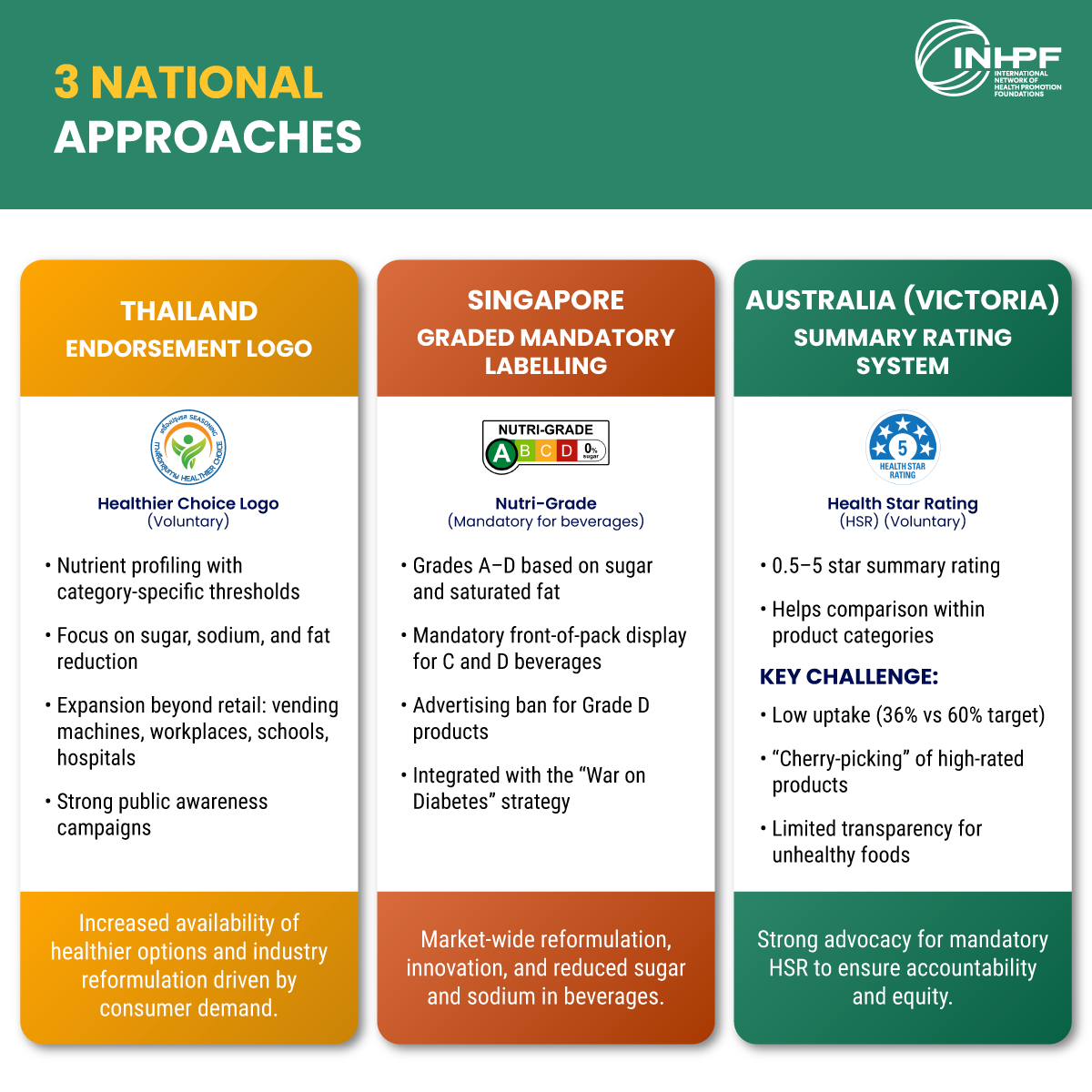
Thailand faces a double burden of malnutrition. Among youth aged 6–14, overweight and obesity rates increased from 9.7% in 2007 to 13.9% in 2014. To address rising NCD risks, ThaiHealth partnered with the Food and Drug Administration and Mahidol University’s Institute of Nutrition to establish the Healthier Choice logo; a voluntary endorsement system that translates complex nutritional data into a single and recognizable icon. Its strength lies in rigorous nutrient profiling where products are evaluated against specific thresholds for sugar, sodium, and fat, with criteria tailored to different food categories.
Focus on expanding healthy food environments beyond retail shelves, the initiative engages franchise chains and vending machine operators, working with institutional managers to increase availability of certified products in workplaces and schools. Collaborate with the Thai Dietetic Association to apply nutritional standards to hospital food recipes is a way to integrate healthy choices directly into healthcare settings.
Public communication drives consumer uptake. Campaigns like the How Sweet is Thailand? expo and Choose Well, Eat Well build public literacy and demand for labeled products. This consumer pressure incentivizes manufacturers to reformulate recipes by reducing sugar, sodium, and fat to qualify for the logo, shifting the market toward healthier products.
Singapore: Nutri-Grade Labelling and Market Transformation
Singapore’s Nutri-Grade system is central to its War on Diabetes, a national strategy launched in 2016 to curb rising diabetes rates. Unlike voluntary logos, Nutri-Grade is a mandatory grading system for beverages, classifying drinks into four color-coded grades; A (lowest sugar and saturated fat) to D (highest). Grade C and D beverages must display the mark on front packaging, while Grade D products face a total advertising ban. This high-stakes environment has transformed the market, with manufacturers competing to reformulate recipes that maintain taste while reducing sugar and sodium.
Beyond beverages, Singapore addresses high sodium intake through the Sodium Reduction Pledge. 9 in 10 Singaporeans exceed daily sodium limits, with average intake nearly double WHO guidelines. The Health Promotion Board (HPB) works with manufacturers to promote lower-sodium salts and sauces in commercial kitchens and processed foods, making healthier options the default rather than the exception.
Singapore ensures comprehensive protection across the life course by combining Nutri-Grade for the general population with the SIFECS Code, which regulates infant food marketing to protect early childhood nutrition.
Australia (Victoria): Health Star Rating and the Case for Mandatory Labelling
Australia’s Health Star Rating (HSR) system (launched in 2014) is a voluntary front-of-pack labelling scheme that rates products from half a star to five stars based on nutritional profile. The system helps consumers compare packaged foods at a glance. HSR is part of a 10-year strategy to deliver healthier lives and fairer health outcomes statewide.
However, voluntary adoption has proven problematic. Data from The George Institute for Global Health (Nov 2024) shows uptake stagnating at 36% below the federal government’s 60% target. More concerning, analysis of over 21,000 products reveals 61% of products eligible for 5 stars display the rating, compared to only 16% of half-star products. This selective disclosure denies consumers information about the unhealthiest products. The transparency gap has fueled advocacy for mandatory HSR: 82% of Australian adults support mandatory labelling on all packaged foods. Mandatory labelling would empower consumers and force manufacturers to compete on nutritional quality, not just branding.
HSR is a comprehensive food systems approach. By advocating for mandatory labelling alongside protections against unhealthy food marketing to children and sustainable food procurement in schools, health authorities aim to reshape the entire food environment.
Comparing Approaches: Key Design and Policy Differences
These nutrition labelling strategies represent 3 distinct models of food system intervention.
Design and Format:
- Endorsement Logos (Thailand): The Healthier Choice logo acts as a binary seal of approval. It identifies products that meet a certain nutritional threshold, making it highly effective for quick identification of healthier options but providing less detail on products that do not qualify.
- Graded Labels (Singapore): The Nutri-Grade system uses a tiered approach (A to D). This provides a more granular comparison of nutritional quality, specifically highlighting the unhealthiest options (Grades C and D) to discourage consumption through both visual cues and advertising bans.
- Summary Rating Systems (Australia): The Health Star Rating provides a graduated scale (0.5 to 5 stars), allowing consumers to compare the healthiness of products in the same category at a glance.
Voluntary vs. Mandatory Models: Thailand and Australia rely on voluntary participation, which encourages industry cooperation but enables cherry-picking. Singapore’s mandatory Nutri-Grade for beverages ensures total transparency, requiring all products to display ratings regardless of healthfulness.
Industry Engagement: In Thailand and Singapore, health authorities have positioned labels as catalysts for innovation. Industry leaders view labelling as a competitive opportunity for reformulation rather than regulatory burden. Australia’s experience shows that without mandatory requirements, uptake stagnates that only 36% of products adopted HSR after a decade, far below government targets.
Lessons for Health Promotion Foundations
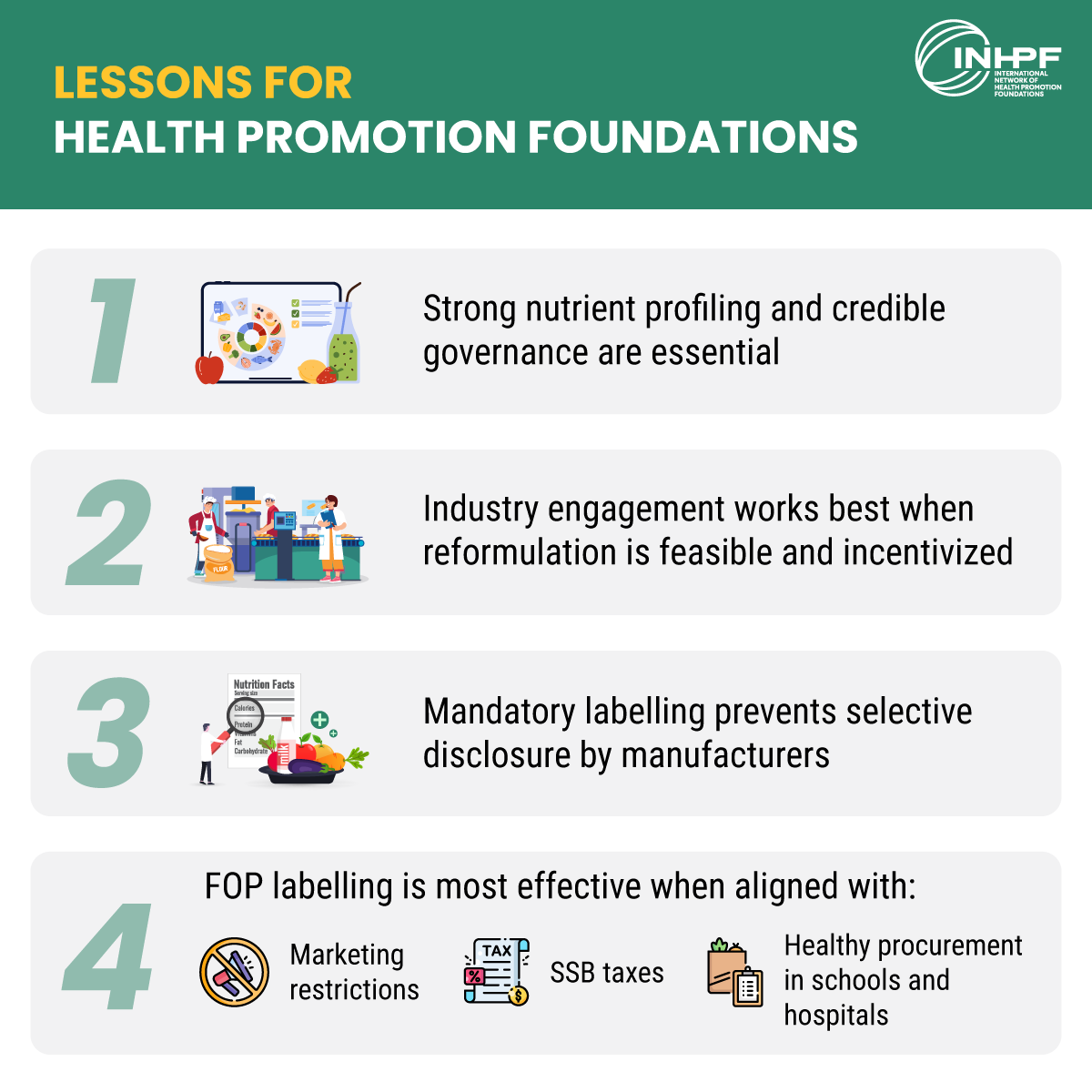
Thailand, Singapore, and Australia offer key lessons for health promotion foundations implementing evidence-informed food system reforms:
- Rigorous Nutrient Profiling and Credible Governance: Success depends on scientific integrity. Thailand and Singapore demonstrate that involving academic and regulatory bodies ensures credible nutrient thresholds resistant to industry lobbying.
- Aligning Labelling with Industry Feasibility: Working with manufacturers early bridges the gap between public health goals and commercial feasibility (Thailand’s collaboration with vending operators and Singapore’s reformulation support). Providing reformulation tools turns industry into partners rather than adversaries.
- The Power of Mandatory Implementation: Australian evidence shows voluntary systems plateau, leaving unhealthiest products unlabeled. Mandatory labelling especially for high-risk categories like beverages and ultra-processed foods is essential for full market transparency.
- Complementary Policy Integration: Nutrition labels work best as part of a systems approach, integrated with sugar-sweetened beverage taxes, restrictions on marketing to children, and healthy procurement policies in schools and hospitals.
From Labels to Healthier Food Systems
Front-of-pack nutrition labelling has evolved from an informational tool into a catalyst for reshaping food environments. Whether through endorsement logos, graded ratings, or star systems, these initiatives serve dual purposes, empowering consumers with transparent information and incentivizing industry to reformulate products.
Thailand, Singapore, and Australia demonstrate that while label design matters, the regulatory framework and policy ecosystem drive long-term impact. By moving beyond individual choice toward system-level interventions; mandatory disclosure, industry accountability, complementary policies, health promotion foundations can create environments where healthy choices are easy choices. As countries refine these models, the shift from labels to comprehensive food systems reform remains vital in addressing NCDs globally.
Recent developments in Australia, including renewed federal commitment to pursue mandatory Health Star Ratings, signal a policy shift toward greater transparency and accountability in food labelling. As governments refine implementation models, the evolution from voluntary disclosure toward comprehensive, system-wide reform remains central to addressing diet-related NCDs globally.
Download the full infographic
Explore how Health Promotion Foundations are using front-of-pack nutrition labelling to reshape food systems, strengthen accountability, and drive healthier product reformulation across Thailand, Singapore, and Australia.
Download the full infographic
Read next
Explore how Health Promotion Foundations are building healthier cities and workplaces through urban design, workplace innovation, and community-led solutions in Building Health-Promoting Environments and Infrastructure.
Explore the Network
Explore the INHPF network and how Health Promotion Foundations collaborate globally to advance health and equity.
More insights from the Network
Visit our Insights page to explore case studies, strategies, and evidence from member organizations.