

Fast-Paced Lifestyles and Unhealthy Defaults
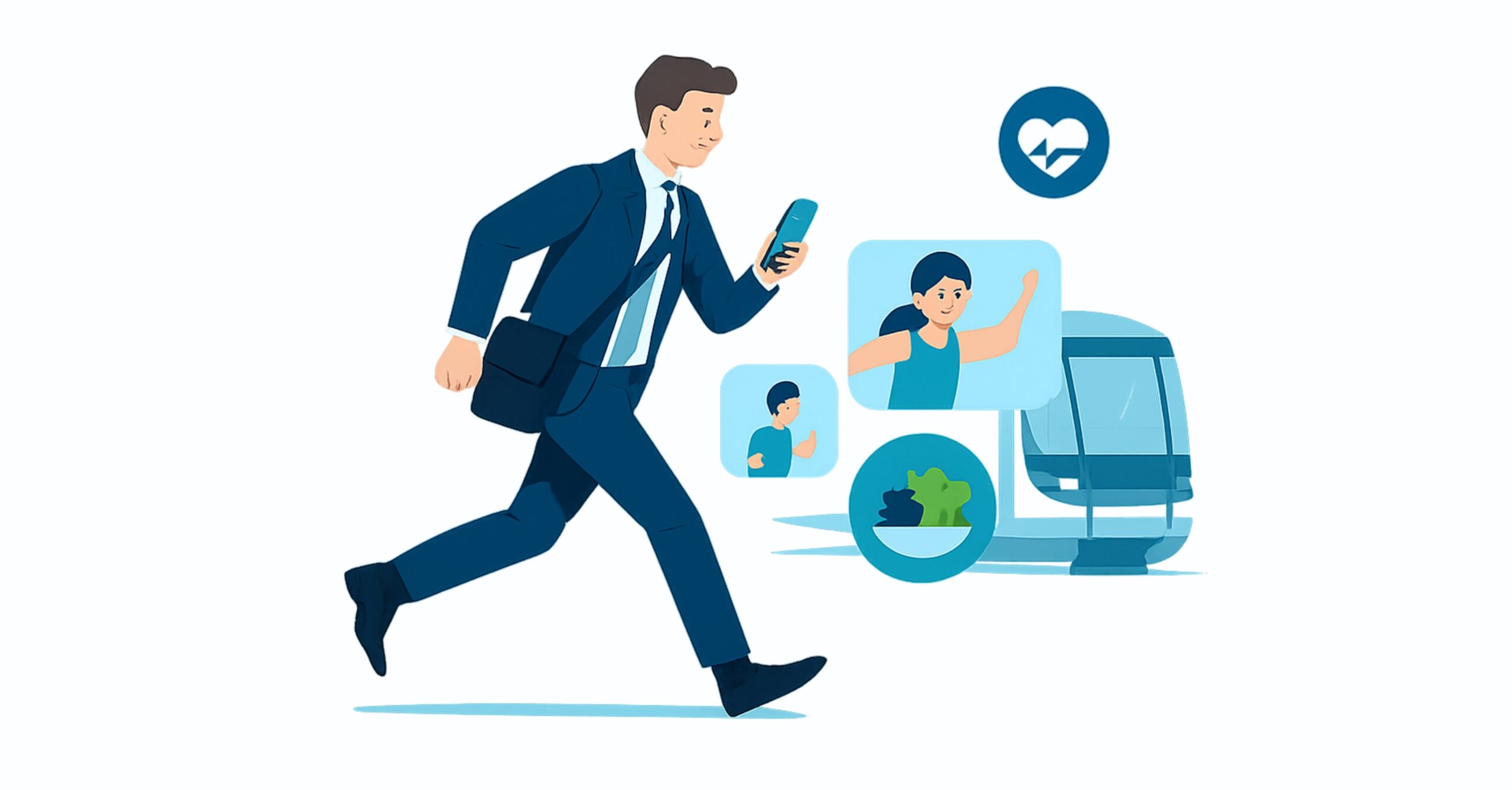
In fast-paced cities across Asia-Pacific, especially among the working-age population, the pace of daily life leaves little room for balanced meals or regular physical activity. Long commutes, irregular working hours, limited access to fresh food, and digital distractions have normalized unhealthy routines.
Time scarcity is a major barrier. In cities like Singapore, Bangkok, and Australia, people cite lack of time as a key reason for skipping meals, relying on fast food, or avoiding exercise. Making things worse, many environments fail to support healthy choices; convenience stores outnumber green grocers, sedentary work is the norm, and advertising often pushes ultra-processed foods.
These unhealthy defaults are reinforced by vending machines loaded with sugary drinks, urban design that discourages walking, and food delivery apps that prioritize convenience over nutrition. In such systems, making healthy choices requires extra time, effort, and money. It’s not that people don’t want to be healthy, but environments make it harder to be.
This disconnect between intention and reality underpins rising rates of obesity and non-communicable diseases (NCDs), particularly among working adults and young people in urban settings. Health inequities deepen when low-income or marginalized groups are most affected by poor access to healthy food, safe recreational spaces, and workplace flexibility.
“How fast-paced urban living creates unhealthy environments”
Why Health Promotion Needs to Adapt to Real Lives
Traditional health promotion strategies; leaflets, guidelines, or lectures, are insufficient for today’s lifestyles. Effective interventions must fit into how people live, work, eat, and move. For health promotion to succeed, it must be embedded into everyday life rather than existing as a separate task.
Health Promotion Foundations (HPFs) are increasingly recognizing this shift. They are moving beyond “Telling people what to do” and instead redesigning systems, settings, and experiences to make healthy living easier, faster, and more enjoyable.
If people do not have time and resources, health systems must do the heavy lifting. The strategy is to
- Bring nutritious food into places people usually go such as workplaces and transit hubs
- Make physical activity part of social connection and fun such as peer-based or gamified movement
- Use trusted influencers and digital platforms to reach people where they spend their time
- Design programs that are flexible, mobile, and inclusive
Health promotion today is to reshape the defaults through co-design, personalization, and policy. Campaigns must compete with fast food apps, streaming, and unpredictable work hours. That takes creativity, collaboration, and a deep grasp of real-life challenges. Ultimately, adapting health promotion to real life is not only more effective, but more equitable. When healthy choices become the easiest and most attractive ones, everyone benefits.
Health promotion strategies that fit modern routines and time scarcity
Case examples
“Real-World Interventions from the Asia-Pacific”
Victorian Health Promotion Foundation, Australia (VicHealth)
This Girl Can – Victoria was a social marketing campaign that encouraged women to get active in ways that feel good, not look good. Instead of promoting athletic perfection, it featured women of diverse ages, body types, and backgrounds moving at their own pace. The campaign ran across social media, TV, print, and local councils, integrating with community events like This Girl Can Week, where free beginner-friendly classes were held statewide. It particularly targeted women who feared judgement and had limited time for formal exercise, helping them build confidence to move in everyday life.
Future Active, delivered in partnership with Reclink Australia, focuses on young people (16–25 years old). Co-designed with youth, it activates underused local spaces like parks and sports halls with low-cost and youth-driven activities such as dance, basketball, and fitness challenges. The goal is to make physical activity part of social life and local culture, not a chore or separate event.
(https://www.vichealth.vic.gov.au/programs-projects/future-active)
Tonga Health Promotion Foundation (TongaHealth)
TongaHealth’s approach to healthy living is built around the rhythm of community life. Recognizing that many working adults struggle with time and resources, TongaHealth has implemented programs that are flexible, enjoyable, and culturally grounded.
One of their most successful interventions is the promotion of zumba sessions held early in the morning or late evening. These zumba are often organized through churches, workplaces, or town committees and schools, making it easy for people to participate without disrupting their routines. The focus is on consistency, not competition.
To make physical activity even more engaging, TongaHealth has also introduced TongaHealth Community Volunteer Zumba Instructors. This is demand driven based on the demand from the communities , once a request is received, the closest zumba instructors to the village will be allocated for the request communities three times a week for 8 weeks. This can be extended for a further 4 weeks as long as a formal request is received and a volunteer zumba instructor will be trained from that community during the 8-12 weeks. These free classes are held in public spaces andcommunity halls and feature lively music and group-based movement. Zumba has proven especially popular among women, offering a fun and social way to stay active that fits well with Tonga’s communal culture and love of dance.
On the healthy eating front, TongaHealth supports families with simple visual meal guides using local ingredients. These are distributed through schools, churches, and health clinics, helping households plan meals that are healthier, affordable, and practical for daily life. Short videos of cooking demonstrations have been broadcasted on TV and a cooking book recipe will be available this year for distribution.
By aligning physical activity and nutrition with familiar social settings and shared values, TongaHealth is turning healthy habits into accessible community routines.
(https://www.tongahealth.info/)
Health and Wellbeing Queensland (HWQld), Australia
My Health for Life is designed for busy adults by removing many common barriers to healthy change. Participants receive free health coaching over 14–18 weeks, offered in flexible formats: one-on-one, online, phone-based, or group sessions. This allows people to participate at home, during breaks, or after hours.
The program is co-designed with participants to focus on achievable actions such as walking after dinner, meal prepping on weekends, or limiting soft drinks. Health coaches come from diverse professional backgrounds, including dietitians, nurses, and exercise physiologists, and tailor their guidance to each person’s need and routine.
It also offers culturally adapted sessions for First Nations peoples and Culturally and Linguistically Diverse (CALD) communities, increasing relevance and accessibility. More than 33,000 people have joined the program, with reported improvements in weight, waistline, physical activity, and motivation levels.
(https://hw.qld.gov.au/initiatives/my-health-for-life/)
Singapore Health Promotion Board (HPB)
HPB’s Healthy Workplace Ecosystems offer free, convenient wellness activities such as lunchtime exercise sessions, health talks, cooking workshops, and on-site screenings within office buildings. These are designed to fit around the workday, reducing the time and effort needed to access health services.
(https://www.hpb.gov.sg/workplace/healthy-workplace-ecosystem)
The Workplace Outreach Wellness (WOW) Program brings tailored health packages directly to companies of all sizes. Activities include:
- Fitness sessions across intensity levels
- Nutrition talks and meal planning
- Mental wellbeing workshops for stress and resilience
- On-site chronic disease screenings and 1-on-1 lifestyle coaching
(https://www.hpb.gov.sg/workplace/workplace-outreach-wellness-programme)
To engage employees digitally, HPB uses the Healthy 365 mobile app. This all-in-one digital companion allows users to:
- Track daily steps and physical activity
- Join national and corporate fitness challenges
- Earn redeemable points for healthy rewards
- Receive tailored nudges, reminders, and motivational tips
(https://www.healthhub.sg/programmes/healthyliving)
By combining physical access with real-time digital support, HPB removes common barriers such as time, cost, and motivation. Health becomes not an extra task, but part of the workday and daily habits such as a walking challenge with colleagues or a quick workout during lunch. HPB’s hybrid model makes healthy living more realistic, scalable, and inclusive.
Preventive Health SA, Australia
Neighborhood Nature Project and Green Space Equity
(https://natureplaysa.org.au/)
In response to data showing that 75.8% of South Australian children and youth (5–17 years) do not meet recommended activity levels, Preventive Health SA launched the Neighbourhood Nature Project in partnership with Nature Play SA. The initiative activates public open spaces in low-socioeconomic areas through:
- Nature trails that blend physical activity with Aboriginal culture and environmental connection
- QR-coded trail signage, short videos, and a dedicated website
- Community-led events to increase participation and place ownership
The Green Space Equity Project identifies and addresses geographic and social disparities in access to safe, quality green spaces. Evidence and policy guidance were developed to support local and state governments in creating more inclusive and usable public spaces. (https://chiaprt.org.au/)
10,000 Steps South Australia Program
(https://www.10000steps.org.au/)
To support everyday movement among adults, Preventive Health SA partnered with Central Queensland University to bring the 10,000 Steps program to South Australia. This multi-strategy behavior change initiative uses:
- A mobile app and website to help users track steps and set goals
- Integration with wearables and workplace wellness strategies
- The annual Billion Steps Challenge, a state-wide campaign where individuals and teams join through workplaces or community groups
Thai Health Promotion Foundation (ThaiHealth)
From Sugar Reduction to Local Markets
ThaiHealth addresses unhealthy diets through policy, education, and environmental changes. Their initiatives include:
- Community green markets that provide affordable, fresh produce and reduce reliance on processed foods.
- Sugar reduction in schools and public meal programs to improve children’s diets early in life.
- Nutrition improvement programs tailored for working people, especially in urban settings, where fast food and skipped meals are common.
- Stakeholder-led school nutrition reforms, involving teachers, parents, and students in meal planning and feedback loops.
A National Agenda for All Ages
ThaiHealth has positioned physical activity as a national health priority. Key actions include:
- Master Plan for Physical Activity Promotion (2018–2030) and the earlier National Strategy on Physical Activity Promotion, which guide long-term, multisectoral efforts.
- Urban design support, promoting walkable communities, bike-friendly zones, and safe public spaces for movement.
- Community wellness projects and health walks/runs that engage people across all age groups.
- Technological innovations like the Feelfit tracker, SWING app for elderly mobility, and BAOJAI digital platform that combines activity tracking, dietary monitoring, and AI-powered coaching.
Workplace Well-being and Happy Organizations
(https://happyworkplace.thaihealth.or.th/)
Recognizing that adults spend most of their day at work, ThaiHealth promotes the Happy Workplace model, improving diet, physical activity, stress reduction, and overall well-being. Participants reported better diets, more exercise, reduced debt, and higher happiness scores using tools like the HAPPINOMETER.
Strategies for Relevance and Reach
“Smart strategies to embed health into daily life across diverse communities”
1. Co-Design and Local Leadership
Projects like VicHealth’s Future Active and This Girl Can – Victoria, as well as TongaHealth’s Zumba sessions, exemplify co-design in action. These initiatives were shaped with input from participants, making them culturally grounded and emotionally meanings. Co-design ensures interventions are not imposed but invited, meeting people where they are and reflecting their values, schedules, and motivations.
- This Girl Can – Victoria was co-developed with women who had been inactive, addressing fear of judgment as a key barrier.
- Future Active created spaces that youth felt safe and excited to be in, shaped by their lived experiences and led by young community leaders.
- My Health for Life in Queensland tailors content to individual circumstances, with health coaches helping participants design small, sustainable changes to fit busy lives.
2. Mobile Access and Digital Tools
Digital platforms are proving essential for embedding health into the everyday. Apps and mobile-friendly content give people access to support without needing to create extra time or navigate complex systems.
- Singapore’s Healthy 365 app allows users to track steps, join challenges, earn rewards, and access health nudges from their phone, turning movement into a game integrated into daily routines.
- Preventive Health SA’s 10,000 Steps program uses a mobile app to help South Australians track movement and participate in state-wide walking challenges.
- ThaiHealth’s Feelfit and BAOJAI platforms integrate diet, activity, and well-being tracking with AI-powered insights, making self-care personalized, intuitive, and flexible.
3. Making the Environment Do the Work
Rather than relying solely on individual drive, many HPFs are working upstream to change the environments that shape behavior.
- Preventive Health SA’s advertising restrictions on unhealthy food across government transit assets reduce exposure to junk food cues in public spaces, nudging healthier decisions.
- HPB’s Healthy Workplace Ecosystems integrate health into commercial buildings, eliminating barriers of time and location for working adults.
4. Community Ambassadors and Influencers
Trusted messengers matter. Campaigns are increasingly using real people such as peers, colleagues, elders, and youth to carry messages and normalize healthy behaviors.
- VicHealth’s This Girl Can ambassadors share authentic stories that break stigma around appearance and fitness.
- Preventive Health SA’s nature trails feature local culture and history, reinforcing community pride while promoting movement.
- HPB and ThaiHealth work with workplace leaders and social influencers to increase engagement across generations.
5. Inclusive, Multilingual, and Culturally Tailored Approaches
Relevance also depends on inclusion. Programs that tailor content for diverse languages, abilities, and cultural practices reach further.
- My Health for Life offers culturally adapted coaching sessions for First Nations and CALD communities.
- ThaiHealth supports physical activity programs for people with disabilities, including the use of assistive technology in events like the FES Race.
Conclusion
Across Asia-Pacific, Health Promotion Foundations are rethinking how health fits into modern life. Their strategies show that it is not enough to educate; we must create environments, tools, and experiences that make health the easy, rewarding, and obvious choice.
The cases in this article demonstrate how public health can adapt to real-world constraints:
- By shifting from top-down messaging to user-designed programs,
- By embracing technology as an ally, not a barrier,
- And by embedding health into the workplaces, streets, screens, and social norms of daily life.
When health promotion responds to people’s lived realities, it becomes not just more effective, but more equitable. Fast-paced lives may be the norm. That’s why healthy choices should be the default.